Senior cat dementia signs can be easy to mistake for “normal aging,” especially when the changes happen slowly. Night yowling, staring at walls, getting lost in familiar rooms, house soiling, sleep changes, and new confusion can all be part of feline cognitive dysfunction, but they can also come from pain, kidney disease, hyperthyroidism, high blood pressure, vision loss, or urinary problems.
A single behavior does not confirm dementia. Record when the change happens, how long it lasts, and whether appetite, thirst, weight, mobility, urination, vision, hearing, or responsiveness changed at the same time.
This guide explains the senior cat dementia signs to track, what the DISHA checklist means, what your veterinarian needs to rule out first, and how to make an apartment easier for an aging cat to navigate.
Quick Answer: What Are the Most Common Senior Cat Dementia Signs?
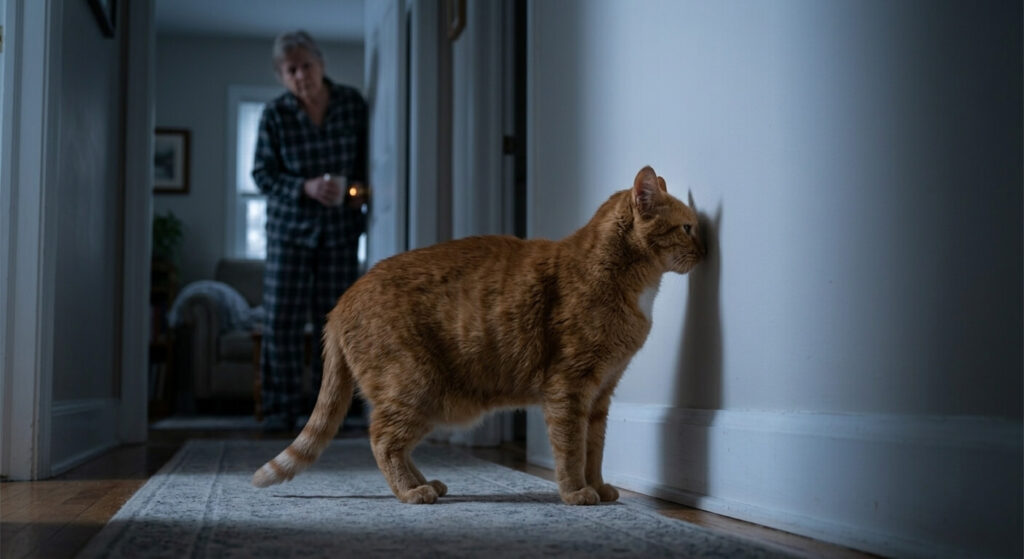
The most common senior cat dementia signs include disorientation, changed interaction, sleep-wake disruption, house soiling, activity changes, night vocalizing, staring at walls, getting lost in familiar spaces, and repetitive or confused behavior. Many veterinarians use the DISHA or DISHAA framework to organize these changes.
However, feline cognitive dysfunction should not be diagnosed at home. Similar signs can come from kidney disease, hyperthyroidism, high blood pressure, arthritis pain, urinary disease, diabetes, vision loss, hearing loss, or other neurologic problems. A senior cat with new behavior changes needs a veterinary workup before the changes are labeled dementia.
Important Veterinary Note
This article is for education, not diagnosis. Senior cat dementia signs overlap with many treatable medical problems. If your older cat suddenly vocalizes at night, urinates outside the litter box, stares at walls, hides, seems confused, loses weight, drinks more, walks stiffly, or changes appetite, schedule a veterinary exam. Bloodwork, urinalysis, blood pressure, pain assessment, thyroid testing, and vision or hearing checks may be needed before feline cognitive dysfunction is considered.
What Is Feline Cognitive Dysfunction (FCD)?
Feline cognitive dysfunction describes a pattern of age-associated cognitive and behavioral changes considered only after medical and sensory causes are investigated. Research has identified brain changes in some affected cats, but an owner cannot confirm those changes from behavior alone.
What May Happen in the Aging Feline Brain
Feline cognitive dysfunction is associated with age-related changes in the brain, including oxidative damage, altered blood flow, neurotransmitter changes, and abnormal protein deposits described in research. These findings help explain why cognition may decline, but they cannot be confirmed from behavior at home and do not make the condition identical to human Alzheimer’s disease.
How Common Is FCD?
Cognitive-type behavior changes become more common with age, but behavior surveys do not equal a confirmed diagnosis of feline cognitive dysfunction. Cornell summarizes research in which about 28% of cats aged 11–14 showed at least one cognitive-type behavior change, rising to more than 50% in cats aged 15 or older. Because pain, kidney disease, hyperthyroidism, hypertension, diabetes, urinary disease, sensory loss, and neurologic disease can produce similar signs, prevalence estimates should not be used to diagnose an individual cat.
The DISHA/DISHAA Checklist: A Way to Organize Observations
DISHA or DISHAA is a framework for organizing changes that may matter in an older cat. It is a recording tool, not a home diagnostic test. The letters commonly group disorientation, interaction changes, sleep-wake changes, house soiling, activity changes, anxiety, and learning or memory changes.
D — Disorientation
Record episodes such as becoming trapped behind furniture, pausing at the wrong side of a door, seeming unable to find a familiar resource, or staring for an unusual length of time. Vision loss, hearing loss, neurologic disease, pain, and acute illness can cause similar behavior.
I — Interaction Changes
Note whether the cat becomes newly withdrawn, unusually clingy, irritable when touched, or less interested in familiar people or animals. Pain, sensory loss, stress, and systemic disease must also be considered.
S — Sleep-Wake Cycle Disturbances
Track new nighttime waking, pacing, vocalizing, daytime sleep changes, and whether the cat appears distressed or simply active. Hyperthyroidism, pain, hunger, hypertension, sensory loss, and routine changes can disrupt sleep.
H — House Soiling
You cannot reliably separate cognitive house soiling from urinary disease, kidney disease, diabetes, constipation, pain, reduced mobility, or litter-box access problems by location or frequency alone. New house soiling in a senior cat warrants a veterinary assessment before it is attributed to dementia.
A — Activity, Anxiety, and Learning Changes
Record repetitive pacing, reduced exploration, difficulty with a familiar routine, altered play, or new anxiety. None of these changes is specific to cognitive dysfunction, so the surrounding medical and environmental context matters.
How to Use the Checklist
Use the checklist to record what changed, when it happens, how long it lasts, and whether appetite, thirst, weight, mobility, urination, vision, or hearing changed at the same time. Contact your veterinarian about any new, persistent, or worsening behavior change; sudden confusion, weakness, collapse, trouble walking, or apparent vision loss needs prompt assessment.
7 Senior Cat Dementia Signs to Track Carefully
The following patterns are useful to document, but no single behavior or combination of behaviors confirms feline cognitive dysfunction at home.
Sign #1: Staring or Appearing Disoriented
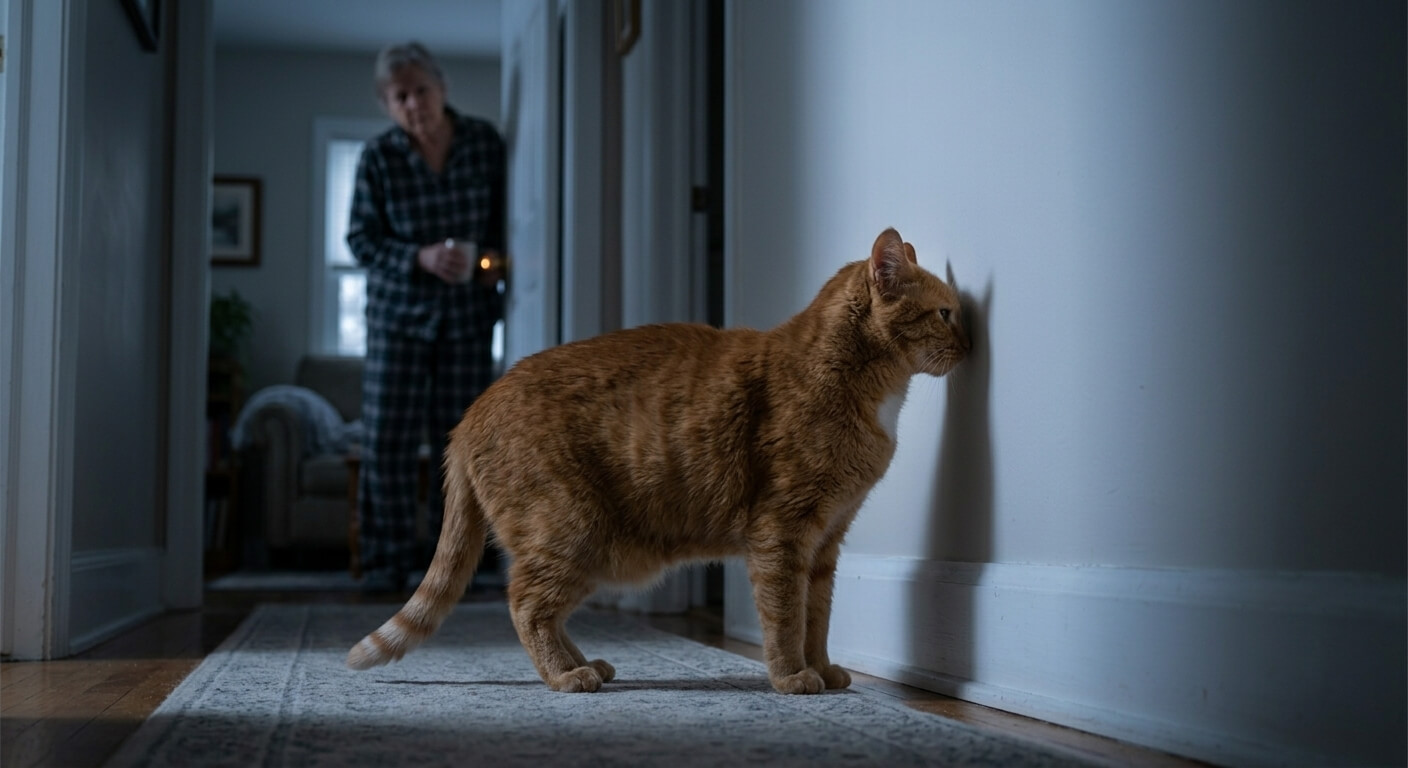
A senior cat may pause, stare at a wall, seem unsure where to go, or become stuck in a corner. Record the duration and context, and note whether vision, balance, walking, appetite, or responsiveness also changed.
Sign #2: Nighttime Yowling and Vocalization
New nighttime vocalizing can accompany cognitive change, but the sound itself cannot identify the cause. Pain, hypertension, hyperthyroidism, hunger, hearing loss, anxiety, and other illness can also cause yowling. A recording and a short behavior log are more useful than describing the sound as uniquely diagnostic.
Sign #3: Forgetting the Litter Box
New accidents may reflect urinary disease, constipation, diabetes, kidney disease, pain, reduced mobility, stress, or an inaccessible box. Arrange a veterinary assessment and make the route and box easy to use. See our indoor cat urinary health guide for urinary emergency signs.
Sign #4: Getting Lost in Familiar Spaces
Getting stuck behind furniture, waiting at the wrong side of a door, or failing to locate a familiar resource can be important. These observations still require vision, hearing, mobility, neurologic, and medical causes to be assessed.
Sign #5: Personality and Interaction Changes
A cat may become more withdrawn, clingy, restless, or irritable. Look for pain and mobility clues at the same time; our cat arthritis signs guide explains common changes that owners may mistake for behavior alone.
Sign #6: Sleep-Wake Cycle Reversal
A cat may sleep more during the day and wake more often at night. Keep evening routines predictable and record whether nighttime activity occurs with thirst, hunger, pain, vocalization, confusion, or litter-box use.
Sign #7: Repetitive Behavior or Apparent Confusion
Repetitive pacing, returning to the same location, or difficulty completing a familiar routine deserves attention. Do not assume the behavior is purposeless until pain, sensory loss, environmental barriers, and medical disease have been considered.
Diagnosis of Exclusion: Why Medical Causes Come First
Feline cognitive dysfunction is a diagnosis of exclusion. That means a veterinarian considers the history and examination while looking for medical conditions that can produce similar signs. More than one problem can be present at the same time.
Common Conditions That Can Look Like FCD
- Pain or reduced mobility, including osteoarthritis
- Chronic kidney disease, diabetes, or other conditions that change thirst and urination
- Hyperthyroidism or systemic hypertension
- Urinary or gastrointestinal disease
- Vision or hearing loss
- Dental pain or other chronic discomfort
- Neurologic disease, medication effects, or acute illness
The Senior Cat Diagnostic Workup
The workup is individualized. A veterinarian may recommend a physical and neurologic examination, pain and mobility assessment, oral and eye examination, blood pressure measurement, bloodwork including thyroid and glucose assessment, and urinalysis. Additional testing or imaging depends on the history and examination. No single blood test confirms feline cognitive dysfunction.
Bring a timeline, medication and supplement list, appetite and water changes, litter observations, weight history, and short videos when safe. These details help the veterinarian decide which tests are appropriate.
Supportive Care: Creating a Senior-Friendly Apartment
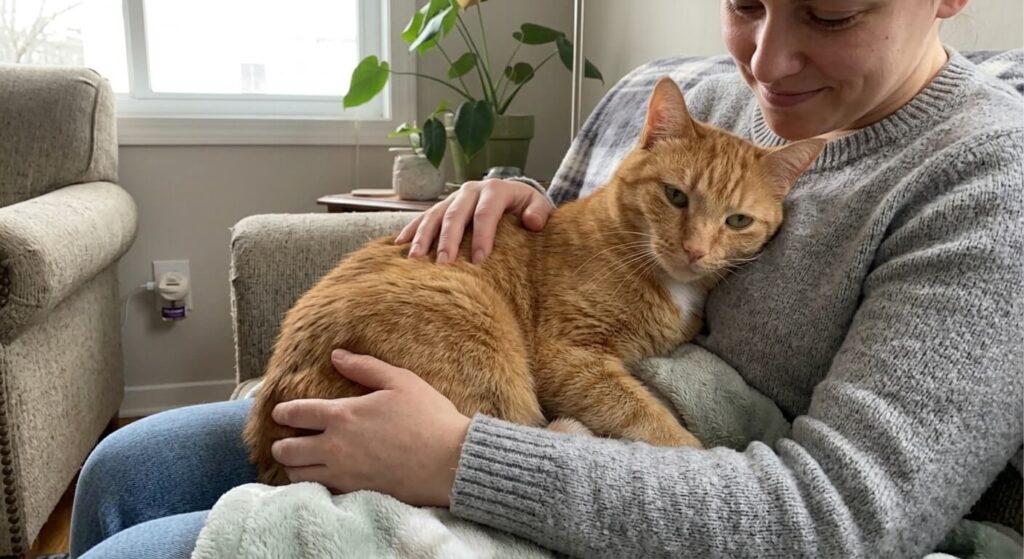
Supportive care should reduce barriers and distress while the medical workup and treatment plan are individualized. Change one practical feature at a time and use a behavior log to judge whether it helps.
1. Keep the Environment Predictable
Keep food, water, beds, litter boxes, and major furniture in familiar locations when possible. Avoid unnecessary rearrangement, and introduce unavoidable changes gradually.
2. Improve Accessibility
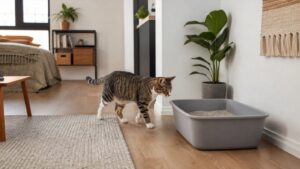
Provide low-entry litter boxes, non-slip routes, nearby water, easy resting places, and steps or ramps where appropriate. Match changes to the cat’s mobility rather than assuming every senior cat needs the same setup.
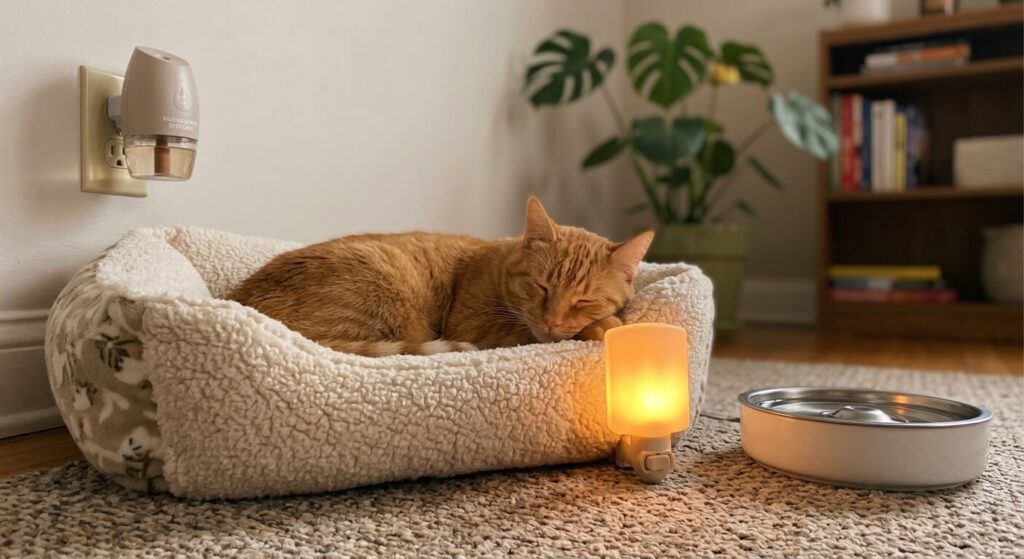
3. Use Gentle Lighting and Nighttime Cues
A dim night light near familiar routes may help a cat with reduced vision or nighttime uncertainty. Keep bedtime routines calm and consistent, but seek veterinary advice for new or escalating night distress.
4. Consider Pheromones Cautiously
A feline pheromone diffuser may help some cats with stress-related behavior, but it does not diagnose or treat cognitive dysfunction and should not replace a medical workup. If you try one, follow the product directions and judge it by a simple behavior log. Our cat calming diffuser guide explains placement and limitations.
5. Offer Gentle, Predictable Enrichment
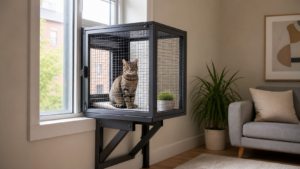
Short play sessions, easy food puzzles, familiar routines, and accessible resting or viewing spots can support daily comfort and engagement. Stop activities that cause frustration or fatigue.
6. Individualize Nutrition
Nutrition may be part of a support plan, but senior cats often have overlapping kidney disease, dental disease, weight loss, diabetes, thyroid disease, or appetite problems. Ask your veterinarian whether a senior or therapeutic diet and any supplement are appropriate for the individual cat.
7. Discuss Medication With the Veterinarian
No medication is approved specifically for feline cognitive dysfunction in the United States. A veterinarian may sometimes discuss off-label medication for an individual cat after other causes, organ function, and drug interactions are considered. Do not start melatonin, CBD, supplements, human medication, or another pet’s medication without veterinary guidance.
Frequently Asked Questions
At What Age Do Senior Cat Dementia Signs Usually Appear?
Cognitive-type changes are reported more often in cats over 10 and become more common with increasing age, but there is no age at which a behavior change should automatically be called dementia. Start documenting new behavior whenever it appears and ask your veterinarian to evaluate persistent or progressive changes.
Can Senior Cat Dementia Signs Appear Suddenly?
Feline cognitive dysfunction is generally associated with gradual change. Sudden confusion, weakness, collapse, trouble walking, apparent blindness, severe vocalization, or abrupt house soiling may indicate an urgent medical problem and needs prompt veterinary assessment.
What Should I Track Before the Vet Visit?
Track the time, duration, frequency, and context of each change. Note appetite, drinking, weight, urination, stool, vomiting, mobility, sleep, interaction, and medication changes. Short videos can help when they can be taken safely.
Can Cat Dementia Be Cured?
There is no established cure for feline cognitive dysfunction. Management focuses on ruling out and treating other disease, reducing environmental barriers, supporting predictable routines, and addressing pain, anxiety, sleep disruption, nutrition, or other problems under veterinary guidance. Response and progression vary, so avoid promises about how quickly decline will slow or how long a cat will remain stable.
Why Does My Old Cat Yowl at Night?
Night yowling can occur with cognitive change, but pain, hypertension, hyperthyroidism, hunger, sensory loss, urinary disease, anxiety, and routine changes are also possible. New or worsening nighttime vocalization deserves investigation rather than being dismissed as normal aging.
Final Thoughts
Senior cat dementia signs are patterns to document, not a diagnosis to make at home. Night vocalizing, staring, getting lost, house soiling, changed sleep, and altered interaction can matter, especially when several changes appear together or worsen over time. Record what you see, take a short video when safe, and arrange a veterinary examination so treatable causes are not missed. At home, make food, water, litter, rest, light, and familiar routes easy to reach.
Scientific References
- Landsberg, G. M., Nichol, J., & Araujo, J. A. (2012). Cognitive dysfunction syndrome: A disease of canine and feline brain aging. Veterinary Clinics of North America: Small Animal Practice, 42(4), 749–768. DOI: 10.1016/j.cvsm.2012.04.003.
- Gunn-Moore, D., Moffat, K., Christie, L. A., & Head, E. (2007). Cognitive dysfunction and the neurobiology of ageing in cats. Journal of Small Animal Practice, 48(10), 546–553. DOI: 10.1111/j.1748-5827.2007.00386.x.
- Cornell Feline Health Center. Cognitive Dysfunction.
- AAHA/AAFP. Behavior and Environmental Needs: Senior Cats.
- AAHA/AAFP. Physical Examination and History Focus: Mature Adult and Senior Cats.