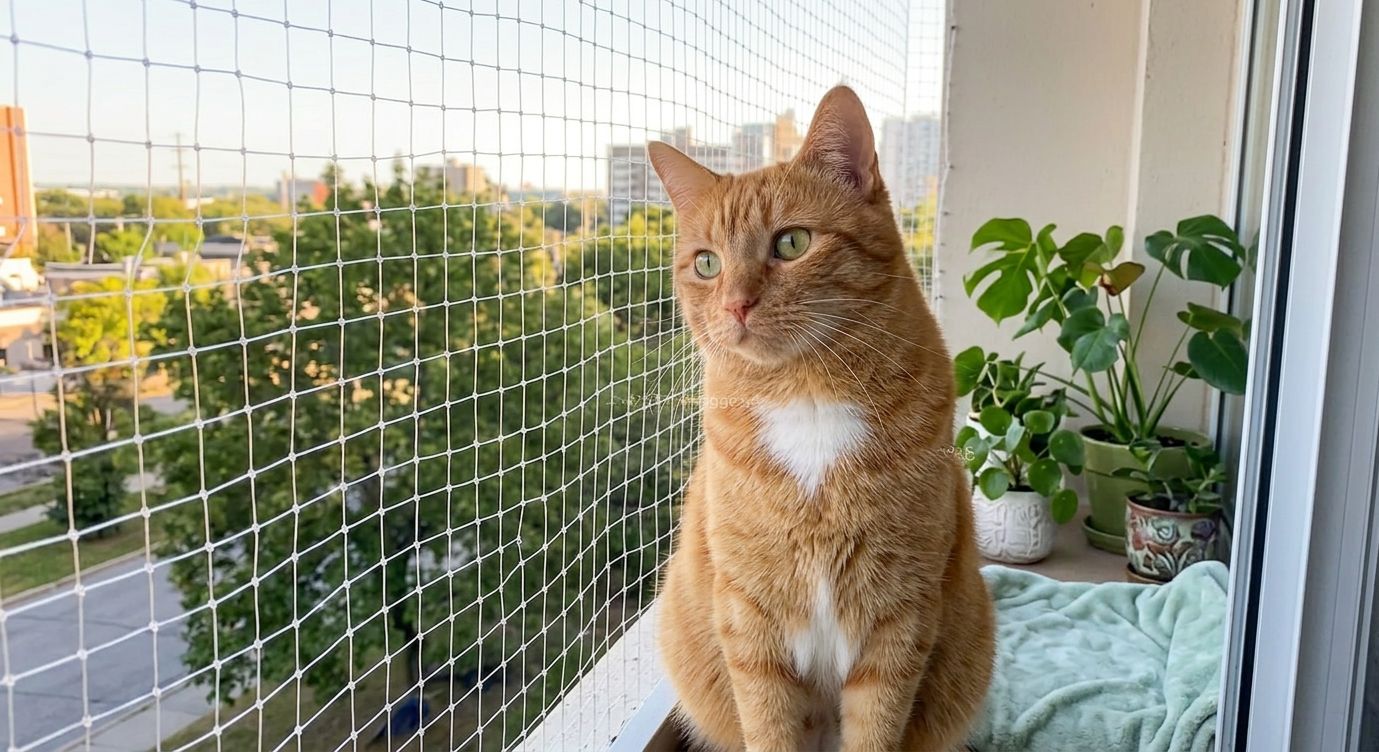
Cat proof balcony apartment safety starts with closing every escape gap before your cat ever steps outside. A safe apartment balcony setup is not about giving unlimited outdoor access; it is about creating a controlled, supervised space with secure netting, stable furniture, and no toxic plants.In a small home, every object does several jobs: the window is entertainment, the couch is territory, the litter area is hygiene infrastructure, and the hallway may be the only sprint lane your cat has. That is why balcony safety needs a system rather than a single trick.
The biggest mistake is treating high-rise risk, renter limits, unsafe netting, and supervision myths as a personality flaw. Most indoor cats are responding to access, timing, scent, boredom, discomfort, hunger, stress, or learned rewards. When the environment changes, the behavior usually changes too. The goal is to make the healthier option obvious, repeatable, and low-friction for both you and your cat.
For apartment cats, the practical question is not “What would be perfect?” It is “What can I repeat on a normal weekday when I am tired, the floor space is limited, and the neighbors can hear every loud crash?” A good plan survives real life: work schedules, tiny kitchens, rental rules, shared walls, and the fact that cats notice patterns faster than we do.
Use this guide as a decision framework. Start with the lowest-risk change, observe your cat’s response for a few days, and then adjust. If the issue involves pain, appetite change, vomiting, urinary signs, sudden aggression, severe fear, or major behavior change, treat it as a veterinary question before treating it as a training problem.
Quick Answer
Cat proof balcony apartment works best when you combine one immediate environmental fix with a repeatable routine. For most apartment cats, that means removing the reward for the unwanted behavior, adding a better legal alternative, and keeping the timing consistent long enough for the new pattern to become predictable.
Start with three questions: what is the cat getting from this behavior, what safe replacement can provide the same benefit, and what part of the apartment setup is making the unwanted behavior too easy? Once you answer those, the solution becomes much less mysterious.
A good first-week plan is simple: choose one main fix, make it visible and easy for your cat to use, remove competing rewards, and track the behavior for seven days. Do not change five things at once if you want to know what actually helped.
Important Safety Note
Safety comes before convenience. Avoid punishment, fear-based tools, essential oils, unsafe adhesives, unstable furniture, loose strings, small chewable parts, and any setup that blocks access to food, water, litter, hiding, or rest. Apartment solutions should make your cat’s environment clearer and safer, not more stressful or harder to navigate.
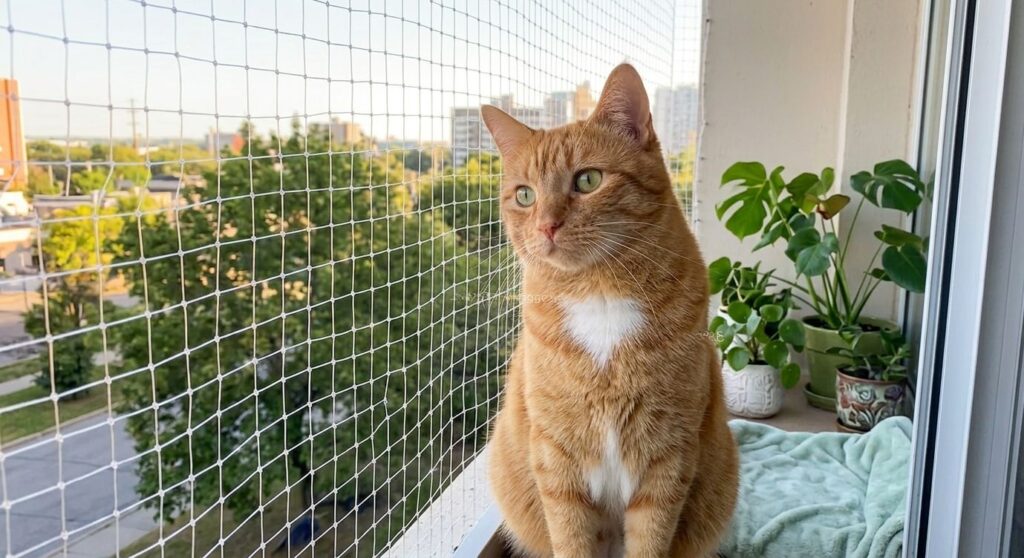
Table of Contents
Why Balcony Safety Is Different in Apartments
A balcony can look like a harmless enrichment space, but for an indoor cat it is one of the highest-risk areas in a small apartment. The problem is not only height. It is the combination of open air, sudden noise, birds, insects, narrow rail gaps, slick flooring, rental rules, and a cat who may react faster than an owner can reach them.
A safe balcony plan should start with one rule: the balcony is not a casual open-door space. It is either fully secured, actively supervised, or off limits. A cat proof balcony apartment setup should prevent falls, escape attempts, chewing hazards, heat exposure, and panic exits before the cat ever gets access.
This matters even more for renters because many balcony changes must be removable. You may not be allowed to drill into exterior walls, attach permanent netting, change railings, or install heavy structures. That means the best setup is usually a layered system: physical barriers, door control, supervised routines, safe plants, and a clear rule for when the balcony is closed.
If your cat already rushes doors, fix that behavior before adding balcony access. Use our how to stop cat from running out door guide before treating the balcony as enrichment.
Apartment Balcony Risk Map
Before buying anything, inspect the balcony from the cat’s perspective. A small gap that looks harmless to a person may be large enough for a paw, head, or shoulder. A ledge that looks too narrow for sitting may still attract a curious cat. A chair placed near the railing may turn a safe barrier into a launch platform.
Use this risk map before allowing balcony access:
| Balcony Risk | Why It Matters | Safer Fix |
|---|---|---|
| Rail gaps | Cats can squeeze, slip, or reach through | Add secure mesh or solid barrier |
| Low railing | Jumping or climbing risk | Keep furniture away from edges |
| Balcony furniture | Creates steps toward the rail | Place seating away from railing |
| Plants | Some plants are toxic or tempting | Use cat-safe plants only |
| Loose screens or netting | Cats may push through weak points | Tension, anchor, and inspect regularly |
| Birds or insects | Trigger sudden lunges | Supervise and block edge access |
| Heat and sun | Cats can overheat quickly | Provide shade and limit time |
| Neighbor noise | Panic can cause bolting | Keep door access controlled |
| Open balcony door | Indoor escape route | Use a door routine and no free access |
The goal is not to make the balcony look secure from across the room. The goal is to make it fail-safe when a cat jumps, leans, scratches, paws, rubs, or panics.
7 Essential Ways to Cat Proof a Balcony Apartment
1. Block Every Gap Before Your Cat Gets Access
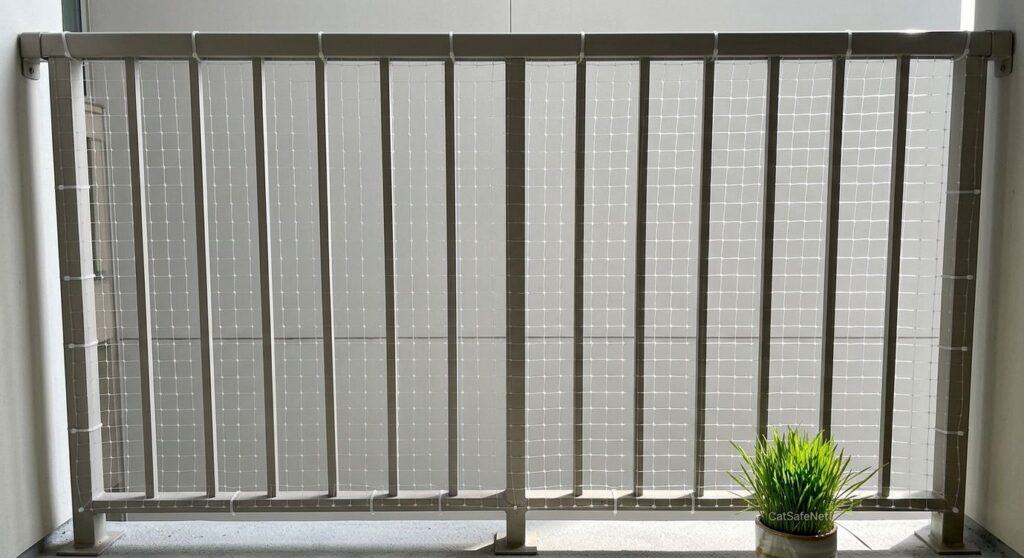
Start with the railing. Look for spaces under the bottom rail, between vertical bars, beside privacy panels, and around corners. Cats do not need a full-body opening to get into trouble. A head or paw through a gap can lead to panic, twisting, slipping, or a failed retreat.
For renter-friendly setups, use balcony mesh, clear panels, tightly secured lattice, or pet-safe screening that attaches without damaging the structure. The barrier should cover the full lower area and any side gaps, not just the front rail.
Do not rely on decorative netting, loose fabric, or a privacy screen that only blocks the view. If your cat can push the material outward, climb it, or get underneath it, the balcony is not secure.
2. Remove Launch Points Near the Edge
Many balcony accidents happen because the cat does not jump from the floor. They jump from a chair, planter, storage box, railing shelf, air-conditioning unit, or small table that gives them extra height.
Move furniture away from the railing. Keep climbing objects near the apartment wall, not near the edge. If your cat needs a perch, place it low and inward, with a clear barrier between the perch and the rail.
A good rule is simple: anything your cat can stand on should not make the railing easier to reach.
3. Use Supervised Balcony Time, Not Free Access
Even a well-secured balcony should not become a place where the cat disappears for hours without checking. Weather changes, screens loosen, neighbors make noise, insects appear, and cats change behavior.
Create a supervised routine instead. Open the balcony only when you are awake, nearby, and able to watch the cat’s body language. Close the door when you leave the room, cook, shower, sleep, or answer the front door.
Balcony access should feel like a controlled enrichment session, not an extra room with unknown risks.
4. Make the Doorway Part of the Safety System
The balcony door is often the weakest point. A cat may learn that the sliding door, screen door, or handle movement predicts outdoor access. Over time, that can create rushing, pawing, vocalizing, and escape attempts.
Use a consistent door routine. Ask your cat to wait away from the door before opening it. Do not open the balcony door while the cat is pressing against the glass or screen. If your cat rushes the door, close access and practice calm waiting first.
For cats who bolt, balcony training should not begin until the door-rushing problem is under control.
5. Choose Cat-Safe Plants and Remove Toxic Temptations
Balconies often hold plants, soil, fertilizer, water trays, and gardening supplies. Some plants are unsafe for cats, and even safe plants can become a problem if they encourage chewing, digging, or climbing near the edge.
Remove toxic plants before the cat is allowed outside. Also remove fertilizer, insect spray, sharp stakes, loose soil bags, and plant stands that can tip over.
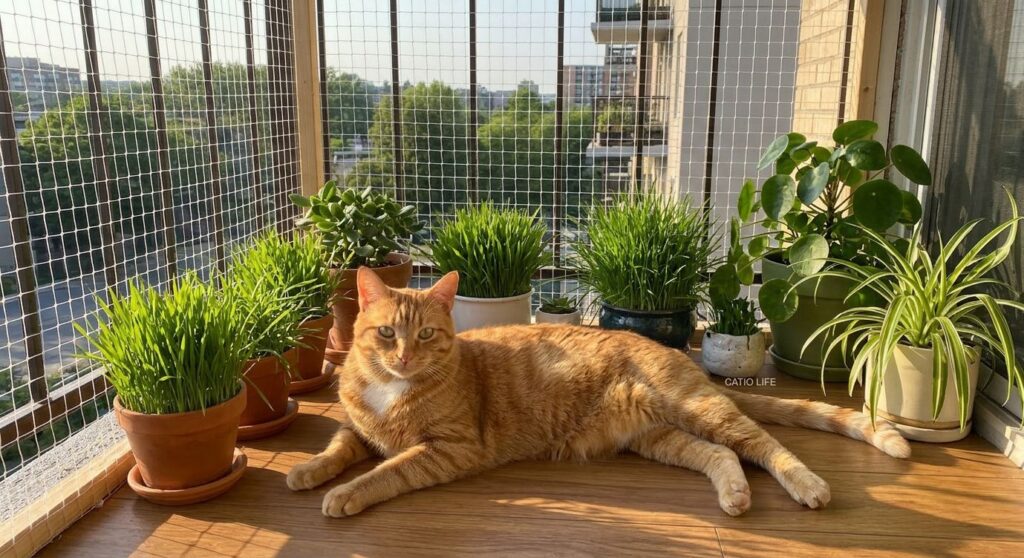
If you want a balcony garden, use a small number of stable, cat-safe plants and keep them away from the railing. For safer plant choices, use our cat safe plants apartment guide.
6. Do Not Treat a Harness as the Only Safety Layer
A harness can help some cats enjoy controlled outdoor exposure, but it should not replace balcony barriers. Cats can back out of poorly fitted harnesses, panic at loud sounds, twist suddenly, or get tangled around furniture.
If you use a harness, train indoors first. The cat should be comfortable wearing it, walking in it, and responding calmly before balcony use. Keep the leash short enough to prevent edge access, but not so tight that it creates fear.
For cats who may eventually walk outside, pair this setup with our best cat harness and leash for indoor cats guide.
7. Build a Balcony Exit Plan Before You Need It
A safe balcony setup includes a way to end the session calmly. Do not chase your cat back inside. Do not grab suddenly unless there is immediate danger. Instead, teach a predictable exit cue: treat inside, door closes, session ends.
Keep high-value treats near the indoor side of the balcony door. When the cat comes in, reward calmly and close the door. Over time, this prevents the balcony from becoming a place your cat refuses to leave.
If your cat hides, freezes, or panics on the balcony, stop balcony access and rebuild slowly from inside the apartment.
Best Balcony Setup by Apartment Type
| Apartment Type | Best Setup | Watch Out For |
|---|---|---|
| Studio apartment | Short supervised sessions with secure mesh | Balcony becoming the only enrichment |
| High-rise apartment | Full barrier coverage and no furniture near rail | Wind, birds, sudden noise |
| Rental apartment | Removable mesh, tension rods, zip-tie systems where allowed | Lease rules and exterior changes |
| Balcony with glass panels | Check bottom and side gaps carefully | Cats jumping onto ledges |
| Balcony with vertical railings | Mesh or clear panels from floor to top safe zone | Pawing through bars |
| Shared balcony or fire escape | Usually not appropriate for cat access | Escape route, neighbors, code issues |
Common Balcony Cat-Proofing Mistakes
Mistake 1: Trusting the Screen Door
A screen door is not a cat-proof barrier. Cats can scratch, push, climb, or panic through weak mesh. If the balcony door is open, the screen should be treated as a delay, not a safety system.
Mistake 2: Leaving Furniture Near the Railing
A chair beside the rail may look harmless until the cat uses it as a launch platform. Keep furniture away from the edge, especially stools, storage boxes, plant stands, and side tables.
Mistake 3: Assuming a Calm Cat Will Stay Calm
A cat who is calm indoors may lunge at a bird, panic at construction noise, or leap away from a neighbor’s dog barking. Balcony safety has to account for sudden behavior, not just normal behavior.
Mistake 4: Using Plants as Decoration Without Checking Safety
Balcony plants can create chewing, digging, climbing, and toxicity risks. Check every plant before your cat gets access.
Mistake 5: Opening the Balcony Door as a Reward for Begging
If meowing or pawing makes the balcony door open, the behavior will grow stronger. Wait for calm behavior before opening the door.
Simple Balcony Safety Checklist
Before each balcony session, check:
- the barrier is still tight
- no gap has opened near the floor or corners
- no furniture has been moved near the railing
- plants and supplies are out of reach
- the cat is calm before the door opens
- you are staying nearby
- the weather is safe
- the exit path back inside is clear
If any item fails, close the balcony and fix the setup first.
Balcony Access Rules for Different Cat Personalities
Not every cat should use a balcony the same way. A quiet senior cat, a high-energy jumper, a nervous door-rusher, and a bird-obsessed young cat need different rules. The mistake is treating balcony access as a simple yes-or-no decision instead of matching the plan to the cat.
For Calm Window-Watching Cats
A calm cat who mostly sits, sniffs, and watches may do well with short supervised sessions once the balcony is physically secured. These cats still need full gap protection, but they may not need elaborate training before every session.
Keep the setup boring and predictable. Use the same time of day, the same door routine, and the same resting spot. If the cat sits quietly and returns indoors easily, you can keep the routine simple.
For High-Energy Jumpers
A cat who climbs shelves, jumps onto cabinets, or launches toward windows should not get balcony access until the environment is very controlled. These cats are more likely to test railings, furniture, screens, and ledges.
For jumpers, remove all launch points near the edge. Do not place chairs, storage boxes, plant stands, or tall perches on the balcony. If you want to offer a perch, keep it low, heavy, stable, and close to the apartment wall.
For Nervous or Easily Startled Cats
A nervous cat may seem safe because they are cautious, but panic can be dangerous. Sudden noise from neighbors, construction, traffic, wind, or a barking dog can make a nervous cat bolt toward the door, hide behind furniture, or push into unsafe corners.
For these cats, start with the balcony door closed. Let them observe through glass first. Then use very short sessions with the door open only while you are close enough to intervene. If the cat crouches, freezes, pants, hides, or tries to escape, end the session calmly.
For Bird-Obsessed Cats
Some cats become completely different animals when birds appear. They may chatter, crouch, lunge, climb, or ignore their owner. For these cats, balcony access must be treated like a high-trigger environment.
Do not allow edge access. Do not rely on verbal recall. Keep the cat away from railing lines and make sure the physical barrier can handle sudden lunging or pawing.
If the cat is impossible to redirect when birds appear, use indoor window enrichment instead of balcony access. A secured window perch may be safer than an outdoor balcony session.
Renter-Friendly Balcony Safety Options
Renters need a balcony setup that improves safety without creating lease trouble. Before installing anything, check your lease, building rules, HOA rules, and local fire safety requirements. Some buildings restrict exterior netting, drilling, balcony screens, visible attachments, or anything that changes the outside appearance of the building.
Renter-friendly options often include:
- removable balcony mesh
- tension-mounted panels
- zip-tied screening where allowed
- clear acrylic panels
- freestanding barriers
- heavy indoor-side gates
- supervised harness sessions
- indoor window alternatives
Avoid anything that blocks emergency access, damages railings, interferes with drainage, or changes shared exterior areas without permission.
If you are renting, connect balcony proofing with your broader deposit-safe plan. Our cat proof rental apartment guide covers renter-friendly protection for floors, cords, scratching zones, litter areas, and move-out documentation.
Balcony Supervision Routine
A safe balcony session should have a beginning, middle, and end. This prevents the balcony from becoming an uncontrolled space your cat expects to access whenever the door moves.
Use this routine:
- Check the barrier, plants, furniture, and weather.
- Ask your cat to wait away from the door.
- Open the door only when your cat is calm.
- Stay nearby during the entire session.
- Keep the session short at first.
- Call your cat back inside with a treat or meal cue.
- Close and lock the balcony door when the session ends.
Do not let your cat decide when the balcony opens. If pawing, meowing, or rushing makes the door open, that behavior becomes stronger. Wait for calm behavior, then open the door.
For cats who rush doors or try to squeeze past people, fix the hallway and door routine first. Use our how to stop cat from running out door guide before adding balcony access.
Safer Alternatives If the Balcony Cannot Be Fully Secured
Some balconies are simply not a good fit for cat access. This may be true if the railing has large gaps, the building does not allow screening, the balcony is shared, the cat is a strong climber, or the height risk is too serious.
If you cannot secure the balcony properly, use indoor alternatives instead:
- a window perch
- a cat tree near a safe window
- a screened window with secure hardware
- a catio-style indoor enclosure near the balcony door
- supervised harness training indoors first
- bird videos or window-view enrichment
- vertical shelves away from open doors
A balcony is enrichment only if it is safe. If the setup depends on perfect supervision, perfect behavior, or a weak barrier, it is not a reliable system.
If you want an outdoor-style setup without relying on an open balcony, see our catio ideas apartment guide for renter-friendly options.
Signs Your Balcony Setup Is Working
A good balcony plan should make your cat calmer, not more frantic. Watch how your cat behaves before, during, and after balcony time.
Signs the setup is working include:
- your cat waits calmly before the door opens
- your cat explores without rushing the railing
- your cat can return indoors without chasing
- your cat does not paw or chew the barrier
- your cat relaxes instead of scanning anxiously
- your cat does not beg at the balcony door all day
- the barrier stays secure after repeated sessions
- balcony access does not increase door rushing
Signs the plan needs to stop or change include:
- repeated climbing attempts
- lunging at birds or insects
- chewing mesh or plants
- trying to squeeze under barriers
- hiding or freezing outside
- refusing to come back inside
- pawing at the balcony door constantly
- increased escape behavior at other doors
If balcony time makes your cat more obsessed with getting outside, reduce access and strengthen indoor enrichment first.
Frequently Asked Questions
1. Can my cat chew through balcony netting?
Some cats can damage weak balcony netting, especially if the material is thin, loose, or interesting to chew. Netting should never be treated as the only safety layer unless it is strong, tightly secured, regularly inspected, and appropriate for pets.
If your cat chews fabric, cords, plants, or mesh indoors, assume balcony netting may also become a chewing target. Use stronger materials, add visual supervision, and keep sessions short. If the cat repeatedly chews the barrier, stop balcony access and switch to indoor window enrichment.
2. What floor height is too dangerous for a catio without netting?
Any height can be dangerous if a cat can fall, jump, slip, or squeeze through a gap. A first-floor balcony can still lead to escape, injury, traffic risk, or getting lost. A high-rise balcony adds severe fall risk.
For apartment cats, the safer rule is not based on floor number. If the balcony has open gaps, climbable edges, loose screens, or unsupervised access, it is not safe. A cat proof balcony apartment setup should physically prevent falls and escapes before the cat gets access.
3. How do I cat proof apartment balcony setups with glass panels instead of railings?
Glass panels can look safer than railings, but they still need inspection. Check the bottom gap, side gaps, corners, drainage openings, and any space where the glass meets the wall or frame. Some cats can squeeze under panels or jump onto narrow ledges beside them.
Also watch temperature. Glass balconies can become hot in direct sun and may reduce airflow. Add shade, limit session length, and avoid leaving your cat outside when the balcony feels warm or stuffy.
4. Is balcony mesh enough to keep a cat safe?
Balcony mesh can help, but only if it is installed securely and your cat cannot climb, push, chew, or slip under it. Loose mesh is a visual barrier, not a safety system.
A better setup combines mesh or panels with furniture placement, supervised access, door training, plant safety, and regular inspections. The barrier is one part of the plan, not the whole plan.
5. Should I use a harness on the balcony?
A harness can be useful for some cats, especially if the balcony cannot be fully enclosed. However, it should not replace physical safety. A frightened cat can twist, back out of a poor harness, or get tangled.
Train indoors first. Your cat should be comfortable wearing the harness before balcony use. Keep the leash controlled, avoid edge access, and never tie the leash to balcony furniture while leaving the cat unattended.
6. Can I leave my cat on the balcony alone for a few minutes?
It is safer not to. A few minutes is enough time for a cat to climb, chew, slip, panic, chase an insect, or push into a weak point. Balcony conditions can change quickly: wind, neighbors, birds, construction noise, and delivery sounds can all trigger sudden movement.
If you need to leave the area, bring your cat inside and close the balcony door.
7. What if my cat cries at the balcony door all day?
Do not reward the crying by opening the door immediately. That teaches your cat that noise controls balcony access. Wait for a quiet moment, then offer a structured session or redirect to indoor enrichment.
If the balcony has become too exciting, reduce access for a few days and add indoor alternatives: window perches, puzzle feeders, vertical shelves, and play sessions. The balcony should be one enrichment option, not the only interesting part of the apartment.
8. Are plants safe on a cat balcony?
Only if every plant is cat-safe and the setup does not create climbing or chewing problems. Some toxic plants are dangerous even in small amounts. Fertilizer, insect spray, plant stakes, and standing water can also be risks.
Before allowing access, remove unsafe plants and supplies. Use our cat safe plants apartment guide before building a balcony garden around your cat.
9. How long does it take for balcony training to work?
Many cats adjust within a few short sessions, but safety matters more than speed. Start with observation through the closed door, then short supervised sessions, then a consistent entry and exit routine.
If your cat rushes, climbs, chews, hides, or refuses to come inside, slow down. The goal is calm balcony behavior, not fast access.
10. When should I stop balcony access completely?
Stop balcony access if your cat repeatedly tries to climb the barrier, chew netting, squeeze through gaps, lunge at birds, panic outside, or become more obsessed with door rushing. Also stop access during extreme heat, storms, loud construction, fireworks, or building maintenance.
If your cat seems anxious, frantic, or unsafe, indoor enrichment is the better option.
Final Thoughts
A balcony can be wonderful enrichment for an indoor cat, but only when it is treated as a controlled safety zone. The safest cat proof balcony apartment setup is not one product. It is a system: secure barriers, no launch points, safe plants, supervised access, door control, and a calm exit routine.
If the balcony cannot be made physically safe, do not force it. A secure window perch, indoor cat tree, catio-style enclosure, or harness training plan can give your cat fresh air and observation without the same level of risk.
For most apartment cats, the best balcony rule is simple: secure it first, supervise every session, and close access the moment the setup depends on luck.
References
- Cornell Feline Health Center: Cat Behavior — background on feline behavior, stress, and indoor cat needs.
- American Veterinary Medical Association: Household Hazards — pet safety guidance for common home and apartment risks.
- ASPCA Animal Poison Control: Toxic and Non-Toxic Plants — plant safety reference for balcony plants and apartment greenery.
- International Cat Care: Environmental Enrichment for Indoor Cats — indoor cat enrichment, safety, and welfare guidance.
-300x169.png)
-300x169.png)
-300x169.png)