Indoor cats need a diet that supports lower daily activity, healthy body weight, hydration, muscle maintenance, digestion, and long-term disease prevention. An indoor cat may be safe from outdoor hazards, but indoor life often means fewer calories burned, more sleeping, less hunting-style movement, and a higher risk of gradual weight gain.
This indoor cat diet guide explains what matters most: animal protein, controlled calories, moisture, feeding routine, food texture, and when a diet question should involve your veterinarian. The goal is not to chase a perfect food label. The goal is to feed a real indoor cat in a way that keeps them lean, hydrated, satisfied, and healthy over time.
If your cat is already overweight, eats too fast, steals another cat’s food, begs constantly, vomits often, refuses food, or has a medical condition, treat diet as part of a larger care plan rather than a simple product choice.
Quick Answer
A good indoor cat diet should be high in appropriate animal protein, controlled in calories, matched to the cat’s age and health, and supported by enough moisture. Most indoor cats do best with measured meals instead of unlimited grazing, especially if they are gaining weight, begging often, or living in a small apartment with limited exercise.
If you want to use part of a measured meal for enrichment, learn how to teach a cat to use a puzzle feeder without withholding the rest of the cat’s food.
The best indoor cat diet is not one single food. It depends on your cat’s body condition, age, activity level, dental health, hydration, stool quality, appetite, and medical history. Wet food can help hydration and portion control, dry food can be convenient, and mixed feeding can work well when portions are measured.
If you are building a complete feeding routine around diet, portions, meal timing, treats, and weight control, start with our apartment cat feeding and weight control guide.
Important Safety Note
Do not make aggressive diet changes if your cat is sick, not eating, losing weight, vomiting repeatedly, straining in the litter box, drinking much more water, or suddenly refusing a familiar food. Cats can become medically unstable when they do not eat enough. If appetite changes are sudden or your cat has diabetes, kidney disease, urinary problems, food allergies, obesity, or another diagnosed condition, ask your veterinarian before changing the diet.
Table of Contents
If you are building a complete feeding routine, start with our apartment cat feeding and weight control guide, which connects diet, meal timing, portions, treats, and weight management for indoor cats.
What Makes an Indoor Cat Diet Different?
An indoor cat diet needs to match a different lifestyle from an outdoor or highly active cat. Indoor cats usually burn fewer calories because they spend more time sleeping, have fewer long-distance movement opportunities, and depend on people to create play, climbing, and hunting-style activity. That does not mean indoor cats need “diet food” automatically, but it does mean portions and body condition matter.
The biggest indoor diet problem is gradual mismatch. The cat eats the same amount every day, but activity drops after neutering, aging, a move, a schedule change, or a quieter home routine. The owner does not notice the change right away because the cat still looks normal under fur. Months later, the cat is heavier, less active, grooming less effectively, or begging more often because the feeding routine has become disconnected from the cat’s real energy needs.
Indoor cats also depend heavily on hydration support. Many cats do not drink much from a bowl, and dry food alone may not provide enough moisture for every cat. Some indoor cats do well on dry food, some do better with wet food, and many do well with mixed feeding. The right answer depends on body weight, urinary history, stool quality, appetite, dental comfort, owner schedule, and veterinary guidance.
A good indoor cat diet should support:
- lean body condition
- stable energy
- normal stool
- adequate hydration
- healthy muscle
- predictable meal behavior
- safe weight control
- age-appropriate nutrition
- medical needs when present
The goal is not to copy a perfect online formula. The goal is to feed the cat in front of you.
The 5 Essential Indoor Cat Diet Rules
Rule 1: Prioritize Animal Protein
Cats are obligate carnivores, which means their bodies are designed to use animal-based nutrients efficiently. Protein supports muscle, immune function, tissue repair, healthy skin, and long-term strength. For indoor cats, protein is especially important because low activity and aging can both contribute to muscle loss.
A good indoor cat diet should not only focus on calories. It should protect lean muscle while controlling excess weight gain. A cat can be overweight and still lose muscle, especially as they age. This is why simply reducing food without thinking about protein quality and veterinary guidance can backfire.
Look for diets that are appropriate for your cat’s life stage and health status. Kittens, adults, seniors, pregnant cats, overweight cats, and cats with kidney disease, diabetes, urinary problems, allergies, or gastrointestinal issues may need different approaches.
Protein also affects satiety. Some cats beg constantly because they are bored, but some are unsatisfied by a feeding pattern that does not keep them full. Measured meals with adequate protein can help some indoor cats feel more stable between meals.
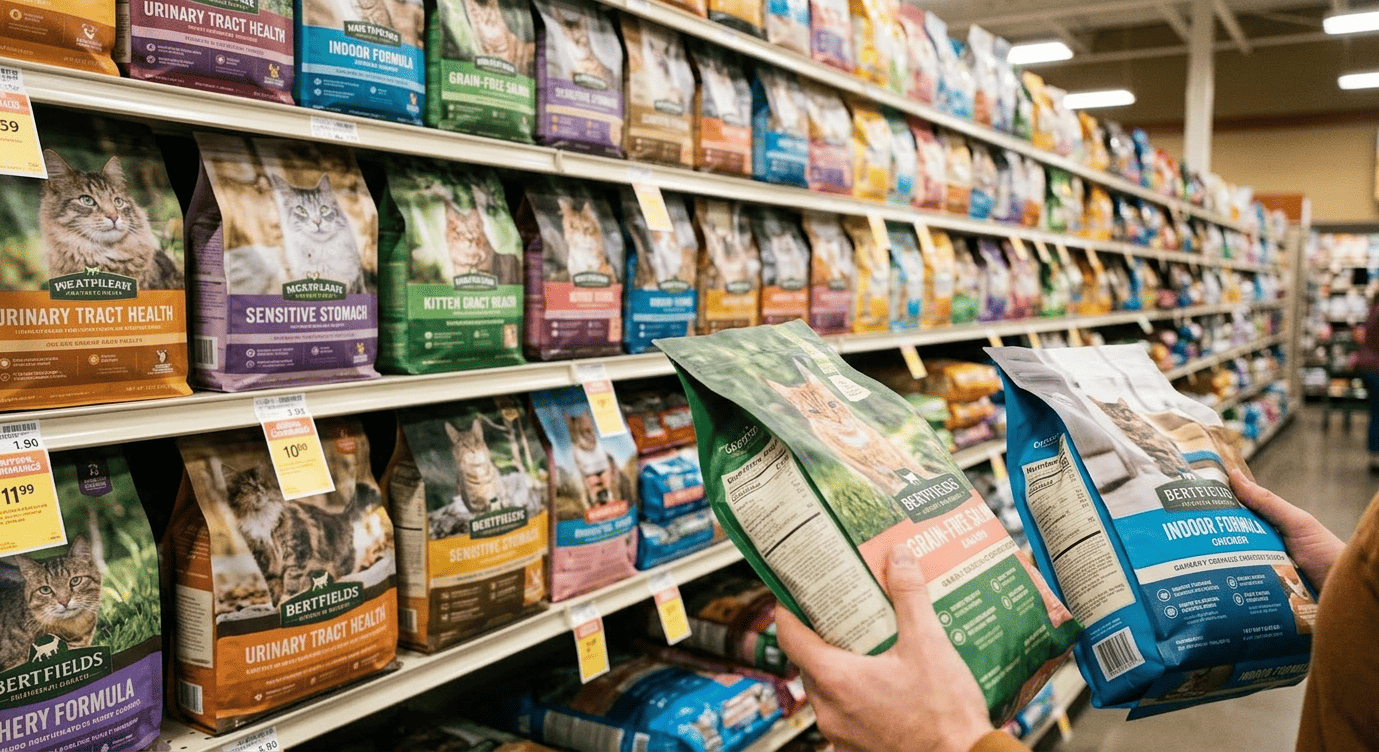
Do not judge a food only by marketing words like “indoor,” “natural,” or “premium.” Read the label, check whether the food is complete and balanced for your cat’s life stage, and ask your veterinarian if your cat has medical concerns.
Rule 2: Control Calories Before Weight Creeps Up
Calorie control is one of the most important parts of an indoor cat diet guide because indoor cats can gain weight slowly and quietly. A few extra calories per day may not look like much, but for a small animal, that surplus matters.
Many indoor cats gain weight because of one or more simple patterns:
- the bowl is always full
- portions are guessed instead of measured
- treats are not counted
- multiple people feed the cat
- the cat eats another cat’s food
- activity decreases but food stays the same
- dry food is poured casually
- begging is treated as hunger every time
Weight gain can affect mobility, grooming, diabetes risk, joint comfort, inflammation, and quality of life. A heavier cat may move less, which then causes more weight gain. This cycle is easier to prevent than reverse.
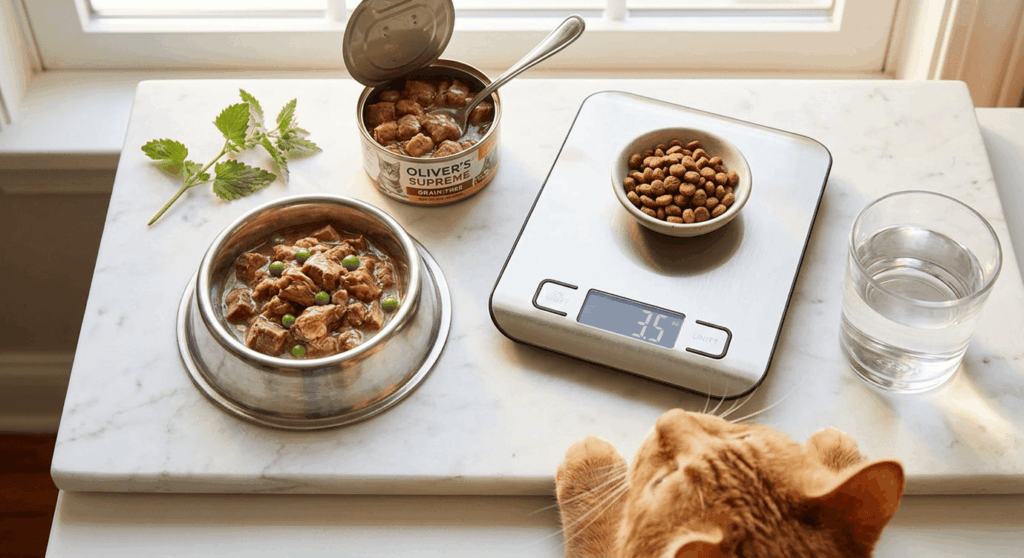
Start with measured meals. Use an actual measuring cup or, even better, a small kitchen scale. Feeding “about half a bowl” is too vague. Different kibble shapes and densities can change calories dramatically.
Treats should also be counted. Even healthy-looking treats can add up if they are given several times a day. If treats are part of bonding, use smaller pieces, training rewards, or pieces of the cat’s normal food.
If your cat eats too fast, begs immediately after meals, or seems obsessed with food, do not only reduce portions. Look at meal timing, food texture, enrichment, and stress. A slow feeder may help some cats eat more calmly, but it should not replace a proper feeding plan. For fast eaters, see our best slow feeder cat bowl guide.
Rule 3: Support Hydration
Hydration is a major part of indoor cat nutrition. Cats evolved to get much of their moisture from prey, so some cats do not drink enough from a standing water bowl. This does not mean every cat must eat only wet food, but it does mean moisture should be considered.
Wet food can help increase total water intake, support satiety, and make portion control easier for some cats. Dry food can be convenient, affordable, and useful in puzzle feeders or timed feeders. Mixed feeding can work well when both wet and dry portions are measured.
Hydration becomes especially important for cats with urinary issues, constipation, kidney concerns, or low water intake. However, cats with diagnosed medical conditions should have diet changes guided by a veterinarian.
Ways to support hydration include:
- offering wet food if your cat tolerates it
- adding water to wet food if your cat accepts it
- using wide, clean water bowls
- placing water away from the litter box
- offering more than one water station
- cleaning bowls often
- trying a fountain for cats who prefer moving water
- watching urine clump size and frequency
Do not force sudden changes. Some cats reject food if texture changes too quickly. If you want to add wet food or water, do it gradually.
For a deeper comparison, pair this section with our guide to wet food vs dry food for indoor cats.
Rule 4: Match Food Texture to Your Cat’s Health
Food texture matters more than many owners realize. Some indoor cats do well with dry food, wet food, or a combination. Others have strong texture preferences or health issues that make one option easier.
A cat with dental pain may avoid hard food, drop kibble, chew on one side, or swallow pieces whole. A cat with nausea may lick gravy but leave chunks. A senior cat may prefer softer food if chewing is uncomfortable. A cat with constipation may benefit from hydration support. A cat prone to overeating may do better with measured wet meals because wet food often provides more volume for fewer calories.
Texture can also affect routine. Wet food requires cleanup and cannot sit out all day. Dry food is easier for timed feeders and puzzle feeders. Mixed feeding gives flexibility but only works if portions are controlled.
Watch your cat’s real behavior:
- Does your cat chew comfortably?
- Does your cat drop food?
- Does your cat vomit after eating quickly?
- Does your cat only lick gravy?
- Does your cat refuse leftovers?
- Does your cat guard food from another cat?
- Does your cat drink enough water?
- Does your cat seem satisfied after meals?
The best diet is the one your cat can eat safely, digest comfortably, and maintain a healthy body condition on. If eating behavior suddenly changes, do not assume your cat is being picky. Appetite changes can be medical.
Rule 5: Build a Repeatable Feeding Routine
A strong indoor cat diet is not only about the food. It is also about the routine. Indoor cats often do better when meals are predictable, portions are consistent, and food access does not create stress.
Free-feeding can work for some cats, but it often makes weight control harder. Scheduled meals make it easier to notice appetite changes, control calories, prevent food stealing, and coordinate feeding with medication or play.
A simple indoor feeding routine might look like this:
- morning measured meal
- short play session before food when possible
- fresh water check
- small evening measured meal
- limited treats
- weekly weight or body condition check
- routine adjustment if weight changes
For cats who wake owners early, beg constantly, or eat too fast, the solution is not always “more food.” It may be meal timing, boredom, lack of play, too few meals, or learned behavior. Timed feeders, puzzle feeders, and pre-bed play can help some cats.
Multi-cat homes need extra structure. One cat may eat quickly, steal food, or block access while the quieter cat eats too little. Separate feeding stations, closed-door meals, microchip feeders, or supervised meals may be necessary.
For routine planning, see our indoor cat feeding schedule guide.
Indoor Cat Diet Decision Table
| Situation | Best Diet Focus | What to Watch For | Helpful Next Step |
|---|---|---|---|
| Healthy adult indoor cat | Measured complete diet | Slow weight gain, begging, low activity | Track portions and body condition |
| Overweight indoor cat | Safe calorie control | Crash dieting, treat calories, inactivity | Ask your vet for a safe weight plan |
| Senior indoor cat | Protein quality, hydration, easy eating | Weight loss, muscle loss, dental pain | Monitor weight and appetite closely |
| Fast eater | Meal pacing and routine | Vomiting, begging, food obsession | Try smaller meals or a slow feeder |
| Multi-cat home | Separate access | Food stealing, guarding, uneven intake | Feed separately or use controlled feeders |
| Urinary history | Hydration and vet-guided diet | Straining, blood, frequent litter box trips | Ask your vet before changing food |
| Dental concern | Comfortable texture and oral care | Dropping food, bad breath, chewing changes | Schedule a dental exam |
Wet Food vs Dry Food for Indoor Cats
Wet food and dry food can both fit an indoor cat diet, but they solve different problems.
For a deeper side-by-side comparison, see our full guide to wet food vs dry food for indoor cats.
Wet food often helps with moisture intake and can be useful for cats who need portion control. Because wet food has more water, it may help some cats feel fuller with fewer calories. It can also be easier for cats with dental discomfort, depending on the texture.
When comparing lower-calorie wet foods, check the exact package size, calories per container, calories per kilogram, and nutritional adequacy statement instead of relying on the front label.
Dry food is convenient, stores well, works in automatic feeders, and can be useful for puzzle feeding. However, dry food is calorie-dense, so casual pouring can quickly lead to overeating. A small-looking amount of kibble may contain more calories than expected.
Mixed feeding can be a practical middle ground. For example, a cat might eat wet food at breakfast and dinner, with a measured dry portion in a puzzle feeder or timed feeder. This can support moisture, routine, and enrichment while still fitting a busy schedule.
The key is measurement. Wet, dry, or mixed feeding can all lead to weight gain if portions are not controlled.
How Much Should an Indoor Cat Eat?
There is no single correct amount for every indoor cat. Food needs depend on age, body weight, body condition, activity level, metabolism, neuter status, medical conditions, and the calorie density of the food.
The feeding guide on the package is a starting point, not a guarantee. Some cats need less than the label suggests. Some need more. The real test is body condition over time.
A practical method is:
- Choose a complete and balanced food appropriate for your cat.
- Measure the daily portion.
- Feed the same amount consistently for two to three weeks.
- Track weight, body shape, appetite, stool, and energy.
- Adjust gradually if your cat gains or loses weight.
- Ask your veterinarian for a target weight if your cat is overweight, underweight, senior, or medically complex.
Do not sharply reduce food without guidance. Cats who stop eating or lose weight too quickly can become seriously ill.
If you need a deeper portion calculation, use our guide on how much to feed an indoor cat.
Indoor Cat Feeding Schedule
A feeding schedule helps indoor cats because it creates predictable food access and makes appetite changes easier to notice. The right schedule depends on your household, but most indoor cats do better with structure than random feeding.
Common options include:
- two meals per day
- three smaller meals per day
- wet meals plus a measured dry portion
- timed feeder meals
- puzzle feeder snacks
- supervised separate meals for multi-cat homes
Kittens need more frequent meals. Adult cats often do well with two or three meals. Senior cats may need adjustments based on appetite, dental comfort, medical needs, or medication timing.
If your cat wakes you early, do not automatically add more food. Try shifting a small measured meal later in the evening, adding play before bed, or using an automatic feeder for an early morning portion.
For more detail, see our indoor cat feeding schedule guide.
Diet Tips for Overweight Indoor Cats
If your indoor cat is overweight, the safest approach is gradual and structured. Do not crash diet. Do not suddenly cut food in half. Do not assume your cat is lazy. Weight gain usually comes from a system: calories, routine, activity, treats, stress, or multi-cat food access.
Start by measuring everything your cat eats for one week:
- meals
- treats
- table scraps
- food stolen from other pets
- lickable treats
- dental treats
- training rewards
Then look for the easiest fix. Sometimes the biggest change is simply using a measuring cup or scale. Sometimes it is replacing random treats with a planned daily treat allowance. Sometimes it is moving from free-feeding to meals.
Add activity gently. A cat who is overweight may not tolerate intense play at first. Use short sessions, low-impact toys, food puzzles, and slow increases.
Watch for begging. Begging does not always mean hunger. It may mean habit, boredom, attention-seeking, stress, or meal timing. Respond with play, affection, or routine changes instead of always adding food.
If your cat needs a weight plan, pair this section with our indoor cat overweight guide.
Diet Tips for Senior Indoor Cats
Senior indoor cats need closer diet monitoring because aging can affect muscle, appetite, digestion, dental comfort, kidney function, thyroid function, and hydration.
Do not assume weight loss is normal aging. A senior cat who is losing weight may have dental disease, kidney disease, hyperthyroidism, diabetes, gastrointestinal disease, cancer, pain, or reduced food access. A senior cat who is gaining weight may be less active because of arthritis, boredom, or changing metabolism.
Senior diet care should focus on:
- maintaining muscle
- supporting hydration
- watching appetite changes
- making food easy to reach
- checking dental comfort
- monitoring weight regularly
- asking your vet before major diet changes
Some senior cats need therapeutic diets. Others simply need better monitoring, more moisture, easier feeding locations, or smaller meals. The right answer depends on the cat’s health.
If your senior cat suddenly refuses food, drops food, drinks more, vomits often, loses weight, or changes litter box habits, schedule a veterinary visit.
Common Indoor Cat Diet Mistakes
Mistake 1: Trusting “Indoor Formula” Without Checking Portions
Indoor formulas can be useful, but the label alone does not prevent weight gain. A cat can still overeat an indoor formula if portions are too large.
Mistake 2: Free-Feeding a Cat Who Cannot Self-Regulate
Some cats graze calmly. Others keep returning to the bowl. If your cat is gaining weight, free-feeding may not be the right routine.
Mistake 3: Forgetting Treat Calories
Treats count. Dental treats, lickable treats, training treats, and small table scraps can add significant calories over time.
Mistake 4: Changing Food Too Quickly
Sudden food changes can cause vomiting, diarrhea, refusal, or stress. Most diet changes should be gradual unless your veterinarian gives different instructions.
Mistake 5: Ignoring Water Intake
Food is not only about calories. Hydration matters too, especially for cats with urinary or constipation concerns.
Mistake 6: Treating Picky Eating as Behavior Only
A cat who suddenly refuses food, changes texture preference, drops kibble, or eats less may have a medical issue. Dental pain, nausea, stress, and illness can all affect appetite.
Mistake 7: Feeding All Cats the Same Way in a Multi-Cat Home
Multi-cat feeding needs structure. One cat may overeat while another eats too little. Separate meals may be necessary.
Diet is only one part of prevention. For the broader system covering vet visits, dental care, weight, urinary signs, and senior changes, see our indoor cat health prevention plan.
When to Ask Your Veterinarian
Ask your veterinarian before changing your cat’s diet if your cat has:
- kidney disease
- diabetes
- urinary problems
- obesity
- unexplained weight loss
- chronic vomiting
- chronic diarrhea
- food allergies
- dental disease
- poor appetite
- senior health concerns
- a prescription diet
- sudden behavior or litter box changes
Contact a veterinarian promptly if your cat stops eating, strains to urinate, vomits repeatedly, loses weight quickly, becomes weak, or seems painful.
Diet is powerful, but it is not a substitute for diagnosis. If something changes suddenly, treat it as a health question first.
Frequently Asked Questions
1. What should an indoor cat eat every day?
An indoor cat should eat a complete and balanced cat food that matches their life stage, body condition, and health needs. Most indoor cats need appropriate animal protein, controlled calories, enough moisture, and measured portions.
The exact food can be wet, dry, or mixed feeding. What matters most is whether your cat maintains a healthy body condition, normal stool, good energy, stable appetite, and adequate hydration.
2. Is wet food better than dry food for indoor cats?
Wet food can be helpful for hydration and portion control because it contains more moisture and often provides more volume for fewer calories. It may also be easier for some cats with dental discomfort or strong texture preferences.
Dry food can still work for many indoor cats, especially when portions are measured. It is convenient, stores easily, and can be used in puzzle feeders or timed feeders. The problem is not dry food itself, but uncontrolled portions and low moisture intake in cats who do not drink much.
Many indoor cats do well with mixed feeding.
3. How many times a day should I feed an indoor cat?
Many adult indoor cats do well with two or three measured meals per day. Some cats benefit from smaller, more frequent meals, especially if they beg, eat too fast, vomit after meals, or wake owners early.
Kittens need more frequent meals. Senior cats or cats with medical conditions may need a schedule based on veterinary advice. The best feeding schedule is one that controls calories, reduces stress, and makes appetite changes easy to notice.
4. Should indoor cats have food available all day?
Some indoor cats can graze without gaining weight, but many cannot. Free-feeding makes it harder to track calories, notice appetite changes, prevent food stealing, and manage weight.
If your cat is overweight, begging often, eating too fast, or living with other cats, measured meals are usually a better choice than an always-full bowl.
5. How much should I feed my indoor cat?
The right amount depends on your cat’s weight, body condition, age, activity level, metabolism, neuter status, and the calorie density of the food. Package guidelines are only starting points.
Measure the daily portion, feed consistently, and monitor body condition over time. If your cat gains or loses weight, adjust gradually. If your cat is overweight, underweight, senior, or medically complex, ask your veterinarian for a safe target.
6. Do indoor cats need special indoor cat food?
Not always. Some indoor formulas can be useful because they may be designed for lower activity levels or hairball control, but the words “indoor formula” do not guarantee the food is right for your cat.
A regular complete and balanced cat food can be appropriate if it fits your cat’s age, body condition, digestion, hydration, and health needs. The feeding amount and routine often matter as much as the formula.
7. Why is my indoor cat always hungry?
An indoor cat may seem hungry because of true calorie needs, boredom, habit, stress, fast eating, low satiety, medical problems, or learned behavior. Some cats beg because food has become their main source of stimulation.
Do not automatically add more food. First check body condition, meal timing, treat intake, play routine, and whether your cat is stealing or losing food access. If hunger is sudden, intense, or paired with weight loss, vomiting, diarrhea, increased thirst, or behavior change, contact your veterinarian.
8. What is the best diet for an overweight indoor cat?
The best diet for an overweight indoor cat is a safe, measured plan that reduces calories gradually while protecting nutrition and muscle. Crash dieting is dangerous for cats and should be avoided.
Start by measuring food, counting treats, stopping random extras, and increasing gentle activity. If your cat needs significant weight loss, ask your veterinarian for a target weight and safe calorie plan.
9. Can I mix wet and dry food for my indoor cat?
Yes, mixed feeding can work very well for indoor cats. It can combine the moisture benefits of wet food with the convenience and enrichment potential of dry food.
The key is portion control. Do not feed a full wet portion plus a full dry portion unless that total matches your cat’s daily calorie needs. Measure both.
10. When should I change my indoor cat’s diet?
Consider a diet change if your cat is gaining weight, losing weight, vomiting often, having stool changes, drinking more, refusing food, showing dental discomfort, becoming senior, or receiving a medical diagnosis.
Make diet changes gradually unless your veterinarian gives different instructions. If the change is sudden, severe, or paired with illness signs, call your veterinarian before experimenting with food.
Final Thoughts
A good indoor cat diet is not about finding one perfect food. It is about building a feeding routine that fits your cat’s body, age, health, appetite, activity level, and home environment.
Indoor cats often need more careful portion control because they burn fewer calories than highly active cats. They also need hydration support, regular weight checks, dental awareness, and a routine that prevents begging, overeating, food stealing, and missed appetite changes.
Start simple: measure meals, count treats, watch body condition, support water intake, and keep feeding times predictable. If your cat is overweight, underweight, senior, medically diagnosed, or suddenly eating differently, involve your veterinarian early.
The best indoor cat diet is the one that keeps your cat lean, hydrated, comfortable, satisfied, and medically supported over time.
References
- AAFCO: Reading Pet Food Labels
- Cornell Feline Health Center: Feeding Your Cat
- Cornell Feline Health Center: Feline Obesity