Why is my indoor cat getting fat? Most indoor cats gain weight because calories, activity, treats, routine, or health status have shifted gradually. The cat may be eating the same food as before, but moving less, receiving more treats, free-feeding more often, or burning fewer calories after neutering, aging, or a household routine change.
Indoor weight gain is usually not one dramatic mistake. It is a slow mismatch between intake and daily energy use. A few extra calories per day, a little less play, or a bowl that is always full can add up over months.
This guide explains the most common reasons indoor cats gain weight and how to identify the cause before choosing a weight-control plan.
Quick Answer
Indoor cats often get fat because they burn fewer calories than they eat. Common causes include free-feeding, calorie-dense dry food, too many treats, reduced activity, boredom, post-neuter calorie changes, aging, food stealing, and medical issues that affect appetite or movement.
The first step is to identify the cause. Do not crash diet your cat. Track food, treats, activity, weight, and body condition for one to two weeks. If weight gain is rapid, your cat is senior, or you notice thirst, urination, appetite, vomiting, mobility, or behavior changes, contact your veterinarian.
Important Veterinary Note
This article is for educational purposes only and is not a substitute for veterinary diagnosis, treatment, or emergency care.
Indoor cats can hide pain and illness until symptoms become serious. Contact a veterinarian promptly if your cat has sudden behavior changes, repeated vomiting, appetite loss, weight loss, urination changes, blood in urine or stool, breathing difficulty, collapse, seizures, severe pain, poisoning risk, injury, or any rapid decline.
For ongoing prevention, pair home observation with regular veterinary exams. Indoor Cat Expert articles are created by the Indoor Cat Expert Editorial Team and follow our Editorial Policy.
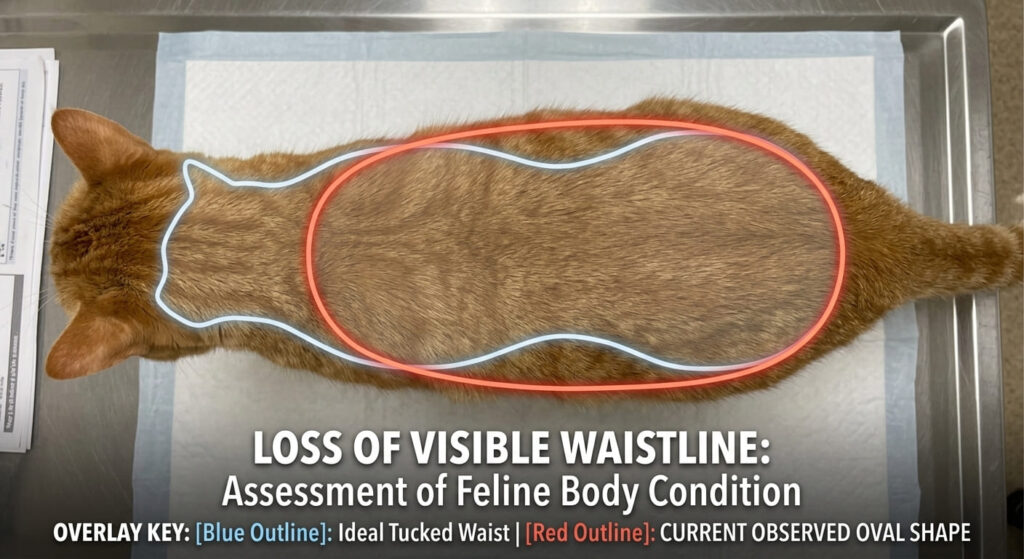
Table of Contents
Why Indoor Cats Gain Weight More Easily
Indoor cats are safer from many outdoor dangers, but indoor life changes the energy equation. A cat who spends most of the day sleeping, watching windows, and walking short distances may burn fewer calories than a cat who climbs, hunts, patrols, and explores.
Many indoor cats also have predictable access to food. Food may sit in a bowl all day, treats may be used for affection, and activity may depend entirely on the owner’s schedule.
Weight gain becomes more likely when:
- food is always available
- dry food portions are guessed
- treats are frequent
- play is inconsistent
- the cat is neutered or aging
- boredom increases food-seeking
- multiple people feed the cat
- another pet’s food is accessible
- pain or arthritis reduces movement
The problem is often gradual. That is why owners may feel surprised when a veterinarian says the cat is overweight. The change happened slowly enough to look normal.
Why Weight Gain Can Be Hard to Notice
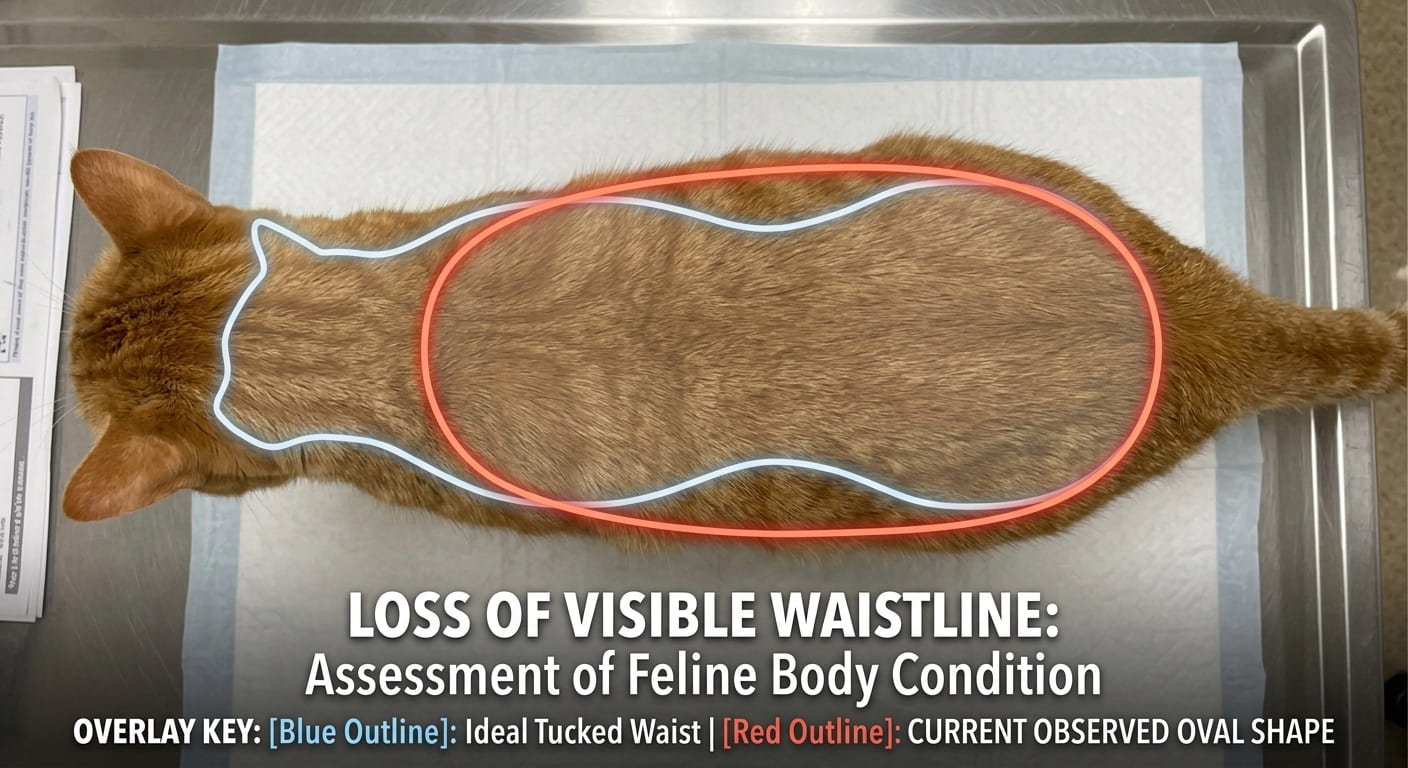
Indoor cat weight gain is often hard to notice because it happens slowly. You see your cat every day, so small changes become normal. A cat may gain a few ounces, then a few more, and the body shape changes so gradually that the owner does not realize it until a vet visit or a photo comparison.
Fur also hides body shape. A short-haired cat may show a rounder waist sooner, while a long-haired cat may look fluffy rather than overweight. Some cats also have a loose primordial pouch, which can make the belly area confusing.
Behavior can hide weight gain too. Many cats still jump, play, and eat normally during early weight gain. The first signs may be subtle:
- slightly less jumping
- shorter play sessions
- more sleeping
- grooming less around the back or rear
- heavier landings
- less interest in climbing
- more frequent begging
This is why weight trends and body condition checks matter. A monthly check is much more useful than waiting for the cat to “look fat.”
5 Common Reasons Indoor Cats Get Fat
Cause 1: Calories Stay the Same While Activity Drops
A cat’s calorie needs can change after neutering, aging, moving homes, illness, injury, or a quieter daily routine. If the food amount stays the same while activity drops, weight gain can follow.
This is common after kitten energy fades. A young cat may race around the home, climb furniture, and play intensely. Later, the same cat sleeps more, plays less, and burns fewer calories, but the bowl stays equally full.
Watch for:
- less jumping
- less chasing
- more sleeping
- shorter play sessions
- less interest in toys
- slower movement
- weight creeping up over months
The fix is not to panic. Start by measuring food and increasing gentle activity. If movement has dropped suddenly or your cat seems stiff, painful, or reluctant to jump, ask your veterinarian about pain or arthritis.
Indoor weight gain is usually a feeding-system problem, not just a food problem. For portions, schedules, treats, hydration, and feeder tools, see our indoor cat feeding and weight control guide.
Cause 2: Free-Feeding Makes Portions Invisible
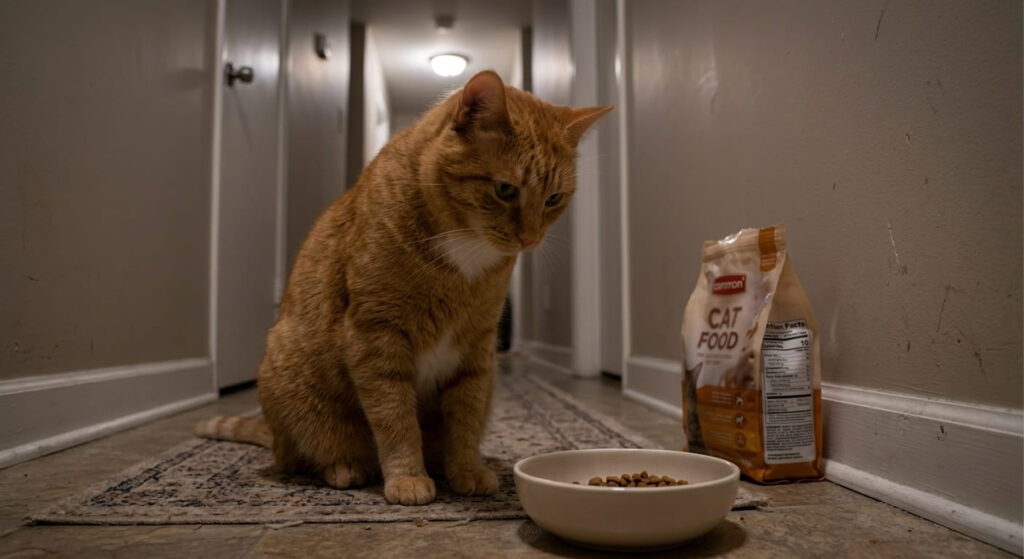
Free-feeding means leaving food out all day. It can work for some cats, but for many indoor cats it makes calories invisible.
Dry food is calorie-dense, and a bowl that looks only “a little topped up” may contain more calories than expected. If several people refill the bowl, no one may know how much the cat actually eats.
Free-feeding also makes appetite changes harder to notice. If food is always available, you may not realize whether your cat is eating more, eating less, or grazing out of boredom.
Signs free-feeding may be contributing:
- bowl is refilled without measuring
- cat returns to the bowl often
- weight rises slowly
- treats are added on top
- appetite is hard to track
- multiple cats share food
Switching to measured meals helps make intake visible. It also makes it easier to notice changes early.
If you are also changing wet food, compare the current package using our 7 low calorie cat wet food label checks instead of choosing from the front-label claim alone.
Hidden Calories That Often Get Missed
Many indoor cats gain weight because the owner counts meals but misses the small extras. These extras may look harmless, but cats are small animals, so small calories matter.
Common hidden calories include:
- lickable treats
- dental treats
- pill pockets
- training treats
- leftover wet food from another cat
- food stolen from another bowl
- dry food used in puzzle toys
- “just a few” extra kibbles
- human food tastes
- multiple family members giving treats
The problem is not that every treat is bad. The problem is that treats are often added on top of the daily food instead of counted as part of it.
For example, if a cat only needs a modest daily calorie amount, a few lickable treats or extra dry food snacks can become a meaningful percentage of the day. Over weeks, that can become slow weight gain.
A simple test is to write down every calorie source for one week. Do not change anything at first. Just observe. Many owners discover the “mystery” weight gain is not mysterious at all.
Cause 3: Treats Become the Main Form of Attention
Treats can quietly become a major source of calories. This is especially common in indoor homes where food is used for bonding, training, guilt, distraction, or routine.
Treat calories include:
- crunchy treats
- dental treats
- lickable treats
- pill pockets
- human food
- food used for training
- extra kibble as rewards
One or two treats may not matter. But several small extras every day can change the calorie balance for a small animal.
Treats can also teach begging. If meowing, pawing, or following leads to food, the cat learns to repeat it. The owner may interpret this as hunger, when it is partly a learned routine.
A better approach is to set a daily treat budget. Count treats as part of the total intake, not as separate from food.
Cause 4: Boredom Turns Food Into Entertainment
Many indoor cats eat because food is the most predictable event in the day. If there is not enough play, climbing, scent, window watching, puzzle solving, or interaction, food becomes entertainment.
Boredom-related food seeking may look like:
- begging soon after meals
- following people to the kitchen
- waking owners for food
- stealing food
- chewing packaging
- acting restless at meal times
- eating quickly
The cat may not need more calories. The cat may need more structure and stimulation.
Food puzzles, timed feeders, treat hunts, wand play, and climbing routes can help. The goal is to make the cat work gently for part of the food and get more non-food enrichment during the day.
Apartment Scenarios That Lead to Weight Gain
Indoor weight gain often follows a pattern. These scenarios are common in small homes and apartments.
Work-From-Home Cat
A work-from-home cat may receive more snacks because the owner is nearby all day. The cat learns that walking to the desk, meowing, or sitting on the keyboard produces food or attention. Over time, snack requests become part of the daily routine.
The fix is not to ignore the cat completely. Replace random food attention with scheduled play, brushing, or a small measured treat allowance.
Owner Away All Day
A cat who is alone most of the day may sleep heavily, then become food-focused when the owner returns. The evening meal becomes the most exciting event of the day. If the owner feels guilty, extra treats may follow.
This cat may need more pre-planned enrichment: window access, food puzzles, safe toys, scent rotation, and a play session before dinner.
Multi-Cat Home
In a multi-cat home, one cat may gain weight because they eat faster, steal leftovers, or guard feeding areas. Another cat may actually eat too little. Shared bowls make this hard to see.
If one cat is gaining and another is losing, the problem is not only calories. It is food access. Feed separately or supervise meals.
Senior Indoor Cat
A senior cat may gain weight because movement drops. Pain, arthritis, dental discomfort, or reduced muscle can change activity. Some senior cats gain fat while losing muscle, which makes body condition harder to judge.
Senior weight change should be discussed with a veterinarian, especially if appetite, thirst, or mobility also changes.
Cause 5: Medical or Age-Related Changes
Sometimes weight gain is not only about food. Pain, arthritis, aging, medication changes, and reduced mobility can make a cat less active. A cat who moves less may gain weight even if the feeding routine seems unchanged.
Medical issues can also change appetite, thirst, and body composition. Some conditions cause weight loss, some cause weight gain, and some make body shape harder to judge.
Call your veterinarian if weight gain appears with:
- drinking more
- urinating more
- vomiting
- appetite changes
- swollen belly
- breathing changes
- weakness
- reduced jumping
- hiding
- stiffness
- sudden behavior change
If your cat is senior, do not assume weight change is normal aging. Senior cats need closer monitoring.
When Weight Gain Is Not Just Food
Most indoor cat weight gain is related to calories and activity, but some cases need medical review. This is especially true when the change is sudden, unusual, or paired with other symptoms.
Medical or health-related factors may include:
- arthritis or pain reducing movement
- medication side effects
- fluid buildup
- abdominal enlargement
- diabetes risk
- hormonal or metabolic changes
- reduced mobility after injury
- senior muscle loss with fat gain
A swollen belly is not the same as normal fat gain. A cat who suddenly looks rounder, breathes differently, seems painful, or acts weak should be checked.
Call your veterinarian if weight gain appears with:
- increased thirst
- increased urination
- vomiting
- appetite changes
- lethargy
- breathing changes
- reduced jumping
- hiding
- painful movement
- sudden belly enlargement
Do not treat every body change as a diet problem. Sometimes the safest weight-control step is a medical exam first.
Indoor Cat Weight Gain Cause Table
| Possible Cause | What It Looks Like | First Step |
|---|---|---|
| Activity dropped | More sleep, less play, fewer jumps | Add gentle play and check for pain |
| Free-feeding | Bowl always full, intake unknown | Measure daily food |
| Treats | Frequent rewards, begging | Set a daily treat limit |
| Boredom | Food-seeking, restlessness | Add enrichment and puzzle feeding |
| Multi-cat food stealing | One cat gains, another loses | Feed separately |
| Aging or pain | Less movement, stiffness | Schedule a vet check |
| Medical change | Thirst, urination, appetite changes | Contact your veterinarian |
From Cause-Finding to a Safe Weight-Loss Plan
This page is designed to help you identify why weight is increasing. Once you have found the likely cause, use our safe indoor cat weight-loss plan for the step-by-step four-week setup, portion tracking, movement, and adjustment guidance. Avoid crash diets, and ask your veterinarian to set an appropriate target for cats with obesity or medical conditions.
How to Find the Real Cause in Your Home
Before changing the diet, track the current routine for one week.
Write down:
- food brand and flavor
- dry food amount
- wet food amount
- treat number
- lickable treats
- who feeds the cat
- whether food is left out
- play time
- food stealing
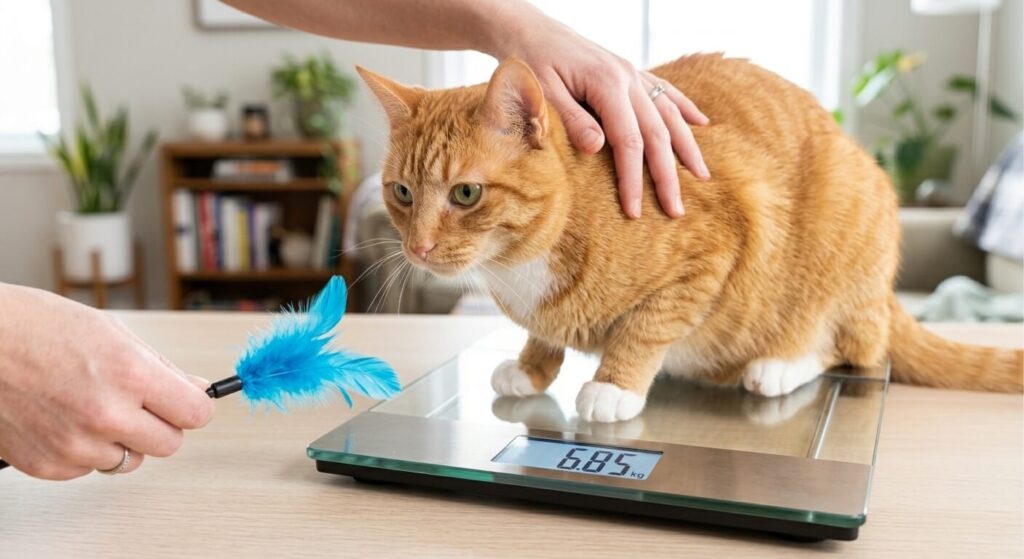
- weight if available
- body condition notes
You may find that the cause is not mysterious. It may be unmeasured dry food, multiple treat-givers, free-feeding, or less play after a schedule change.
If you are not sure whether your cat is overweight, start with this guide: Is My Cat Overweight?
For portion planning, use: How Much to Feed an Indoor Cat
A Simple One-Week Weight Gain Audit
Before you change food, run a one-week audit. This helps you find the real cause instead of guessing.
For seven days, write down:
| What to Track | Why It Matters |
|---|---|
| Dry food amount | Dry food calories add up quickly |
| Wet food amount | Helps compare total daily intake |
| Treats | Small extras can become daily surplus |
| Feeding times | Reveals begging or routine triggers |
| Who feeds the cat | Multiple feeders can double portions |
| Play time | Shows whether activity is low |
| Food stealing | Common in multi-cat homes |
| Water intake | Helps spot health changes |
| Litter box changes | Can reveal medical concerns |
| Weight or body notes | Shows whether the issue is trending |
At the end of the week, look for patterns. Is food always available? Are treats given by more than one person? Does your cat beg at the same time every day? Is activity low? Is another pet’s food accessible?
The goal is to identify the main cause, not to create a perfect spreadsheet. Once you know the pattern, the next step becomes safer.
What Not to Do
Do not crash diet your cat. Do not suddenly cut food in half. Do not skip meals. Do not assume begging always means hunger. Do not punish food-seeking behavior.
Avoid:
- guessing portions
- leaving multiple bowls available
- ignoring treat calories
- switching foods repeatedly without a plan
- forcing intense exercise
- delaying vet care for sudden changes
- feeding all cats from one shared bowl if weight differs
A safe weight plan is gradual and trackable.
What to Do Next
Once you know the likely cause, choose the next step.
If the issue is unclear body condition, start with:
If the issue is portions, start with:
How Much to Feed an Indoor Cat
If the issue is safe weight loss, use:
Weight gain is also part of a bigger prevention routine. For long-term planning, see our indoor cat health prevention guide and our apartment cat feeding and weight control guide.
FAQ
1. Why is my indoor cat getting fat even though I do not feed much?
Your cat may still be eating more calories than needed if dry food is calorie-dense, treats are frequent, portions are guessed, or multiple people feed the cat. Activity may also have dropped.
Track everything your cat eats for one week before changing the plan.
2. Can indoor cats get fat from boredom?
Yes. Boredom can turn food into entertainment. A bored cat may beg, steal food, or return to the bowl often because eating is the most rewarding part of the day.
Add play, puzzle feeders, climbing routes, and non-food attention.
3. Does neutering make cats gain weight?
Neutering can reduce calorie needs in some cats. Weight gain is not inevitable, but portions should be monitored after surgery and after kitten growth slows.
4. Is dry food making my indoor cat fat?
Dry food can contribute if portions are not measured because it is calorie-dense. Dry food is not automatically bad, but free-feeding dry food can make overeating easy.
5. Why is my cat getting fat but still hungry?
Begging does not always mean true hunger. It may come from habit, fast eating, boredom, meal timing, or learned rewards. If hunger is sudden or paired with weight loss, thirst, vomiting, or diarrhea, call your veterinarian.
6. When should I call a vet about weight gain?
Call your veterinarian if weight gain is rapid, the belly looks swollen, your cat drinks more, urinates more, vomits, has appetite changes, becomes weak, or moves less. Also ask for help if your cat needs significant weight loss.
7. Why is my cat getting fat after being spayed or neutered?
Some cats need fewer calories after spaying or neutering because metabolism and activity can change. Weight gain is not guaranteed, but portions should be watched carefully after surgery and after kitten growth slows.
If the same food amount continues while calorie needs drop, weight gain can happen gradually.
8. Can stress make an indoor cat gain weight?
Stress can contribute indirectly. Some cats eat more when routines are disrupted, owners may give more treats for comfort, and stressed cats may move less or guard resources. In multi-cat homes, stress can also affect who gets access to food.
If stress signs appear with weight gain, look at the whole environment, not only the bowl.
9. Why is only one of my cats getting fat?
One cat may eat faster, steal food, guard the bowl, access hidden food, or receive more treats. The other cat may be eating less than you think. Shared bowls make intake hard to measure.
Feed cats separately for a week and track who eats what. This often reveals the cause.
Final Thoughts
Indoor cats usually get fat because daily calories and daily activity slowly stop matching. The reason may be free-feeding, treats, boredom, reduced movement, post-neuter changes, aging, or medical issues.
The best first step is not panic and not a crash diet. Track the routine, identify the cause, measure food, count treats, and ask your veterinarian when health signs are present.
Once you understand why your indoor cat is gaining weight, the next step is much easier: build a safe, gradual plan that protects health while reducing excess calories.