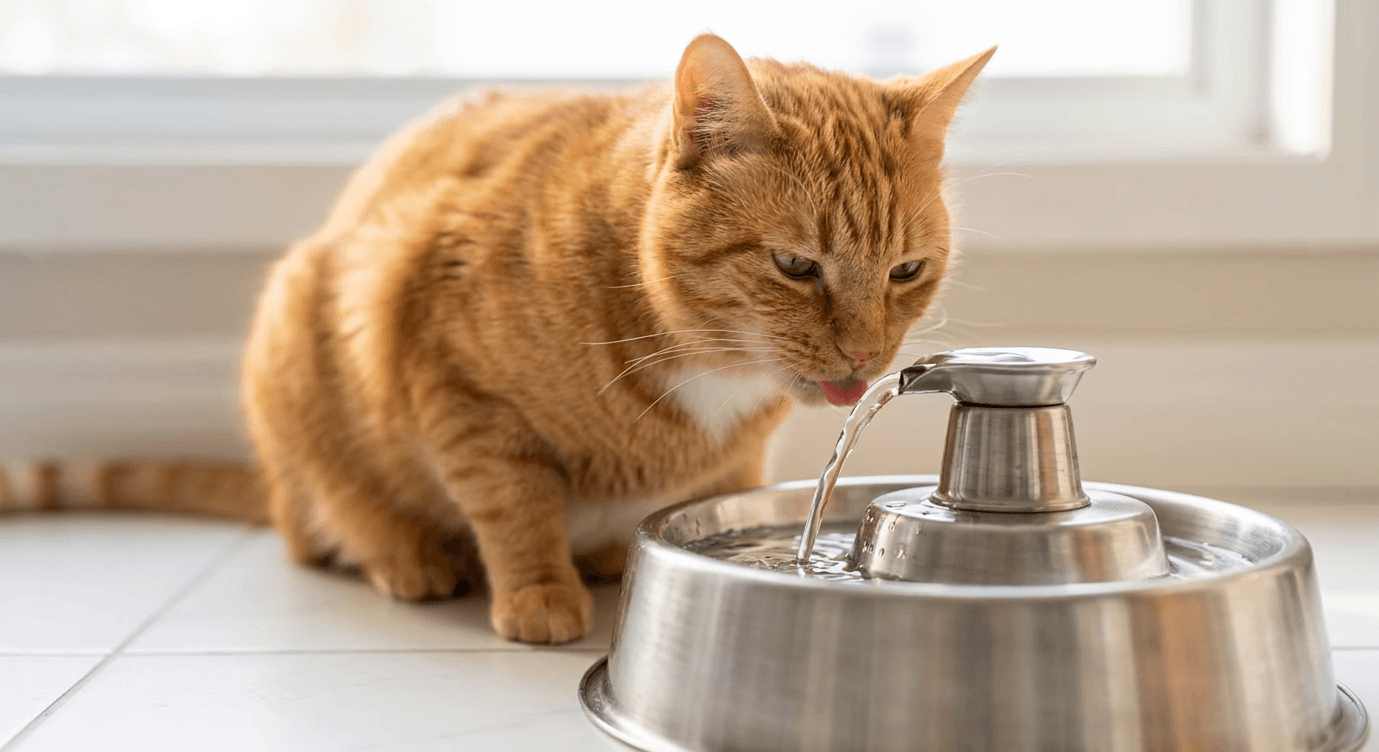
Cat water fountain benefits are mostly about making water more appealing, fresher, easier to notice, and easier to refresh as part of a daily indoor cat routine. Some cats drink more readily from moving water than from a still bowl, while others simply prefer a clean wide bowl. A fountain is helpful when it fits the cat, the home, and the owner’s cleaning habits.
A cat water fountain is not a medical treatment, and it does not replace veterinary care for urinary problems, kidney disease, dehydration, or sudden drinking changes. But for many indoor cats, a well-cleaned fountain can support better water access and make hydration easier to manage.
This guide explains the real benefits, the limits, the cleaning responsibilities, and when a regular bowl may be the better choice.
Quick Answer
Cat water fountain benefits include moving water appeal, fresher-tasting water, easier water monitoring, better access for multi-cat homes, and a more consistent hydration routine. Some cats drink more from a fountain because the movement, sound, and freshness make water more interesting.
A fountain is most useful when it is quiet, easy to clean, placed away from the litter box, and washed often. It is not useful if the owner rarely cleans it, the cat is afraid of the sound, or the fountain becomes slimy. Cats with urinary symptoms, kidney disease, increased thirst, or dehydration signs need veterinary guidance, not only a new water source.
If you are ready to choose a model, compare our guide to the best cat water fountains for safe stainless steel and ceramic options.
Important Safety Note
If your cat is suddenly drinking much more water, urinating more often, straining in the litter box, producing blood in urine, vomiting, losing weight, hiding, or seeming weak, contact your veterinarian. A water fountain can support hydration, but it cannot diagnose or treat urinary disease, kidney disease, diabetes, or dehydration.
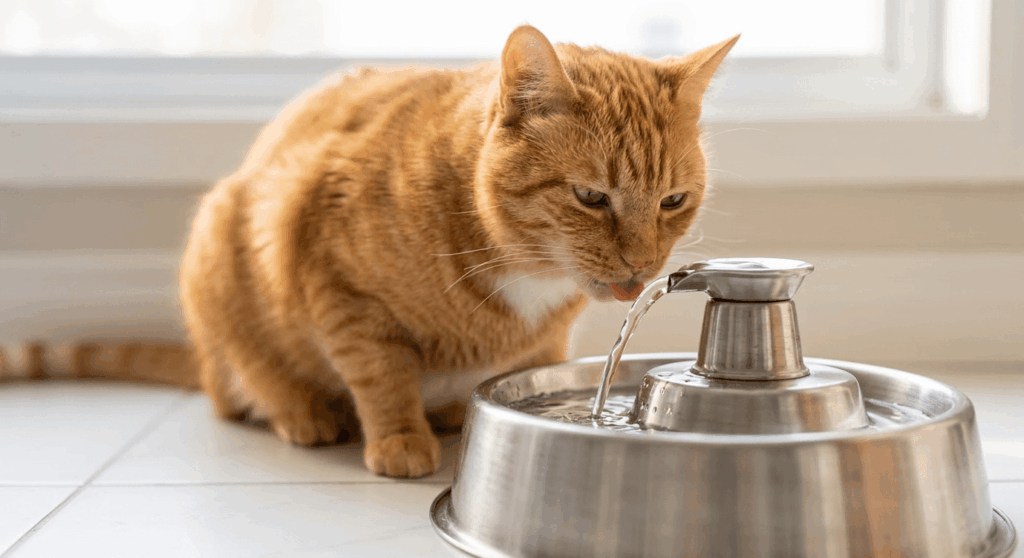
Table of Contents
Do Cat Water Fountains Really Help?
Cat water fountains can help some cats drink more consistently, but they are not magic. The benefit depends on the individual cat, the fountain design, the water quality, the cleaning routine, and the placement.
Some cats are attracted to moving water. They may prefer the sound, movement, or freshness of a fountain compared with a still bowl. Other cats do not care. Some cats even avoid fountains because of motor noise, splashing, narrow drinking surfaces, or unfamiliar movement. Controlled studies have not shown that fountains increase water intake for every cat. One small crossover study found slightly higher intake with a fountain, while another found no overall difference among still, circulating, and free-falling water systems. Treat a fountain as an individual preference test, not a guaranteed hydration upgrade.
The most useful way to think about a fountain is this: it is a water access tool, not a medical solution. It may make water more appealing and easier to monitor, but it does not replace wet food, proper diet, clean bowls, veterinary care, or medical treatment.
A fountain is worth considering if:
- your cat rarely drinks from a bowl
- your cat likes running faucets
- you have multiple cats
- water bowls get dirty quickly
- you want a more visible water routine
- your cat eats mostly dry food
- you need another water station in the home
- your veterinarian wants you to support hydration
A fountain may not be worth it if your cat already drinks well from bowls, the fountain is hard to clean, the motor scares your cat, or you know you will not maintain it.
7 Cat Water Fountain Benefits
Benefit 1: Moving Water May Attract Some Cats
Many cats are interested in movement. A stream, ripple, or bubbling surface can make water more noticeable than a still bowl. This is one of the most common cat water fountain benefits: the water becomes easier for the cat to see, hear, and investigate.
Some cats who ignore bowls will sniff, paw, or drink from a fountain because the movement catches their attention. This is especially true for cats who already try to drink from faucets, sinks, shower floors, or dripping taps.
However, not every cat prefers moving water. Some cats are cautious around sound or motion. If your cat is nervous, choose a quiet fountain with gentle flow and introduce it slowly.
Do not remove the old water bowl immediately. Keep both available while your cat decides.
Benefit 2: Fresher-Tasting Water
Cats can be sensitive to smell and taste. Water that sits in a bowl may collect dust, food particles, hair, litter dust, saliva, or household odors. A fountain keeps water moving and often uses a filter, which can make the water seem fresher.
This does not mean fountain water is automatically clean. A dirty fountain can become worse than a simple bowl because the pump, filter, corners, and reservoir can collect biofilm. The freshness benefit only exists if the fountain is cleaned often.
For best results:
- refill with fresh water daily
- wash the fountain regularly
- replace filters as directed
- clean the pump area
- avoid letting water levels run low
- use a fountain made from easy-to-clean materials
Cats may drink less if water smells stale, warm, or contaminated. A clean fountain can help, but maintenance is the price of the benefit.
Benefit 3: Easier Hydration Support
Hydration matters for indoor cats, especially cats who eat mostly dry food, produce concentrated urine, have constipation tendencies, or have a history of urinary concerns. A fountain may support hydration by making water more appealing and available.
But it is important to be careful with wording: a fountain does not prevent urinary disease by itself. Cats with urinary signs need veterinary care. A fountain is only one supportive tool.
Hydration support can also come from wet food, fresh water bowls, water added to wet food, multiple water stations, and diet changes recommended by a veterinarian. For cats with urinary history, kidney disease, or increased thirst, ask your veterinarian what hydration plan makes sense.
If you are comparing food moisture options, see our guide to wet food vs dry food for indoor cats.
For urinary prevention basics and warning signs, see our indoor cat urinary health guide.
Benefit 4: Better Water Monitoring
A fountain can make water habits easier to notice. With a bowl, small changes may be missed. With a fountain, you may notice the water level dropping faster, the cat visiting more often, or the fountain needing refills sooner.
This can be helpful, but it also means you need to pay attention. Increased drinking is not always a good sign. Cats may drink more because of heat, dry food, activity, or preference, but sudden or major thirst changes can also relate to kidney disease, diabetes, hyperthyroidism, or other medical problems.
Watch for changes such as:
- water disappearing much faster
- larger urine clumps
- more frequent litter box visits
- weight loss
- increased appetite
- vomiting
- weakness
- dehydration signs
- sudden clinginess or hiding
A fountain helps you observe. It does not explain the cause. If drinking changes suddenly, call your veterinarian.
Benefit 5: Helpful for Multi-Cat Homes
In multi-cat homes, water access can become a quiet resource issue. One cat may control a kitchen area, hallway, or favorite room. A shy cat may avoid drinking if the only bowl is in a socially pressured location.
A fountain can help by adding another appealing water station. It may reduce competition if placed well. In a multi-cat home, the goal is not only “one water source.” The goal is water access that each cat can use without pressure.
Good placement matters:
- keep water away from litter boxes
- avoid narrow corners where a cat can be trapped
- place water in more than one room if possible
- do not put all resources in one crowded area
- watch whether one cat blocks another
- clean more often because multiple cats add more saliva and hair
If you have multiple cats, one fountain may not be enough. A fountain plus bowls in different locations often works better.
Benefit 6: Useful for Busy Owners
A fountain can make water management easier for busy owners because it usually holds more water than a small bowl and keeps the water moving. This can be helpful during long workdays, warm weather, or homes where bowls get tipped or dirtied quickly.
But a fountain is not a license to stop checking water. It still needs daily observation. Pumps can fail. Water can run low. Filters can clog. Cats can splash, shed, or drop food into the basin.
For short absences, a fountain can be part of a backup plan, but it should not be the only plan. Cats still need reliable food, litter, safety checks, and someone to notice if the fountain stops working.
If you are planning time away, see our guide on how to leave a cat alone for the weekend.
Benefit 7: Can Support a Cleaner Water Routine
A fountain can encourage owners to take water more seriously. Because it has parts, filters, and a visible reservoir, it may make water care feel like a routine instead of an afterthought.
For some households, that is the biggest benefit. The fountain creates a habit:
- check water level
- rinse debris
- wash parts
- replace filters
- inspect pump
- refresh water
- notice drinking changes
A simple bowl can also work perfectly if it is cleaned and refreshed often. The best water setup is the one you maintain consistently.
Cat Fountain Fit and Safety Table
| Situation | Fountain Fit | Why It May Help | Watch Out For |
|---|---|---|---|
| Cat ignores still water | Good fit | Movement may attract interest | Some cats dislike motor noise |
| Multi-cat home | Often helpful | Adds another water access point | Clean more often |
| Busy owner | Helpful if maintained | Larger reservoir can be easier to monitor | Not a replacement for daily checks |
| Urinary history | Ask vet first | May support water intake | Symptoms need medical care |
| Cat fears noise | Maybe not ideal | Quiet models may work | Do not force use |
| Owner dislikes cleaning | Poor fit | Fountain needs regular washing | Slimy fountains are worse than bowls |
| Weekend absence | Backup only | Can support water availability | Still needs sitter/check-in plan |
When a Water Fountain May Not Be the Best Choice
A cat water fountain is not always the right tool. Sometimes a wide, clean, quiet bowl is better.
A fountain may not be ideal if:
- your cat is frightened by motor noise
- the fountain splashes too much
- your cat avoids moving water
- you cannot clean it often
- the design has hard-to-reach corners
- the pump is unreliable
- your cat has medical symptoms needing veterinary care
- the fountain becomes slimy quickly
- your cat prefers a wide shallow bowl
Some cats dislike their whiskers touching narrow edges. Some dislike plastic smells. Some dislike water near food. Some prefer water in a quiet room instead of the kitchen.
If your cat avoids the fountain, do not force it. Try a different location, lower flow, quieter model, or a regular bowl. The goal is water intake, not winning a fountain argument.
How to Introduce a Cat Water Fountain
Introduce the fountain gradually. Cats are cautious with new objects, especially objects that move or hum.
Step 1: Keep the Old Bowl
Do not remove your cat’s familiar bowl on day one. Keep the bowl available so your cat does not feel forced.
Step 2: Place the Fountain in a Calm Location
Choose a quiet spot away from the litter box, heavy foot traffic, loud appliances, and food bowls if your cat prefers separation. Many cats like water slightly away from food.
Step 3: Start With Gentle Flow
Use the quietest, lowest flow setting if possible. Loud bubbling can scare cautious cats.
Step 4: Let the Cat Investigate
Do not push your cat toward the fountain. Let them sniff, watch, and approach at their own pace.
Step 5: Watch for Preference
If your cat drinks from the fountain, great. If your cat still prefers the bowl, that is also useful information. Some cats need days or weeks. Others simply prefer bowls.
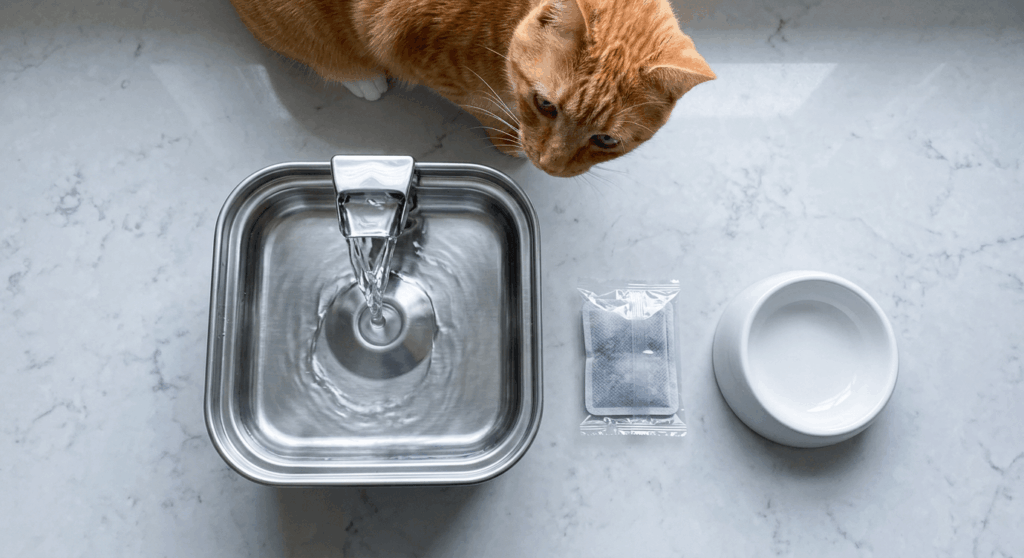
How to Clean a Cat Water Fountain
Cleaning is the part that decides whether a fountain is helpful or harmful. A poorly cleaned fountain can collect slime, hair, food particles, and bacteria.
A practical routine:
- refill with fresh water daily
- rinse visible debris daily
- wash the fountain body at least weekly
- clean the pump area regularly
- replace filters according to instructions
- deep clean more often in multi-cat homes
- use unscented dish soap and rinse thoroughly
- inspect for cracks, buildup, or slime
The pump is easy to forget. Hair and residue can collect inside or around it. If the fountain becomes noisy, weak, slimy, or smelly, clean it immediately.
Plastic fountains may scratch over time, and scratches can hold residue. Stainless steel or ceramic models may be easier to keep clean for some homes, depending on design.
If you are comparing models, see our guide to the best cat water fountains.
Common Cat Water Fountain Mistakes
Mistake 1: Thinking the Fountain Replaces Medical Care
A fountain can support water access, but it cannot treat urinary disease, kidney disease, diabetes, dehydration, or sudden thirst changes.
Mistake 2: Not Cleaning the Pump
Many owners wash the bowl but forget the pump. The pump area can collect hair and biofilm.
Mistake 3: Removing All Bowls Too Soon
Some cats need time. Keep a familiar water bowl available during the transition.
Mistake 4: Placing Water Too Close to the Litter Box
Many cats prefer water away from litter odor and traffic. Poor placement can reduce use.
Mistake 5: Buying a Fountain That Is Hard to Clean
A complicated design may look nice but fail in real life. Choose a fountain you can actually wash.
Mistake 6: Ignoring Noise Sensitivity
Some cats avoid humming, bubbling, or splashing. Quiet models are usually better for cautious cats.
When to Ask Your Veterinarian
Ask your veterinarian if your cat shows signs of urinary or hydration problems, including:
- drinking much more water
- urinating more often
- large urine clumps
- straining in the litter box
- blood in urine
- crying in the litter box
- repeated litter box trips
- vomiting
- appetite loss
- weight loss
- weakness
- dehydration signs
- sudden hiding
- sudden behavior changes
A fountain may support a hydration plan, but symptoms need diagnosis. Do not assume a new fountain will solve a medical problem.
Frequently Asked Questions
1. What are the real cat water fountain benefits?
The main cat water fountain benefits are moving water appeal, fresher-tasting water, easier water monitoring, more water access points, and a more consistent hydration routine. Some cats drink more readily from fountains than still bowls.
The benefits only matter if the fountain is cleaned often and the cat actually uses it.
2. Do cats drink more from water fountains?
Some cats do. Cats who like running faucets or moving water may drink more from a fountain. Other cats drink the same amount or prefer a bowl.
The best way to know is to offer both and watch your cat’s preference.
3. Are cat water fountains safe?
Cat water fountains are generally safe when they are made from cat-safe materials, cleaned regularly, maintained properly, and used with safe electrical placement. The main risks are poor cleaning, pump failure, low water levels, and designs that are hard to wash.
4. How often should I clean a cat water fountain?
Check the water and visible debris daily, then follow the exact model’s instructions for full cleaning and filter replacement. Clean sooner if you notice hair, residue, slime, odor, weaker flow, or pump noise; multi-cat and long-haired-cat homes may need more frequent maintenance.
Always clean the pump and replace filters as directed.
5. Is a fountain better than a bowl?
A fountain is better for some cats, but not all. A clean wide bowl can be excellent if your cat drinks well from it. A fountain is useful when your cat likes moving water, ignores bowls, or needs another appealing water station.
The best option is the one your cat uses and you keep clean.
6. Can a cat water fountain prevent urinary problems?
A fountain can support hydration, but it cannot guarantee prevention of urinary problems. Urinary issues can involve stress, inflammation, diet, anatomy, infection, stones, or other medical factors.
If your cat strains, cries, produces blood, or makes frequent litter box trips, contact your veterinarian.
7. Should I leave a cat water fountain running all the time?
Most fountains are designed to run continuously, but follow the manufacturer’s instructions. Keep the water level high enough so the pump does not run dry. Check the fountain daily.
8. Why won’t my cat use the water fountain?
Your cat may dislike the sound, movement, smell, location, material, water temperature, or narrow drinking area. Try a quieter location, lower flow, fresh water, or a different bowl style. Keep the old bowl available.
Final Thoughts
Cat water fountain benefits are real for the right cat and the right household. Moving water can attract interest, fresher water may encourage drinking, and a fountain can make hydration easier to notice and maintain.
But a fountain is only helpful if it stays clean. A neglected fountain is not better than a clean bowl. Choose a design you can wash, introduce it slowly, keep regular bowls available during the transition, and watch your cat’s real preference.
If your cat has urinary symptoms, sudden thirst changes, weight loss, vomiting, or weakness, contact your veterinarian. Use a fountain as hydration support, not as a substitute for medical care.
References
Cornell Feline Health Center: Hydration
Cornell Feline Health Center: Feline Lower Urinary Tract Disease