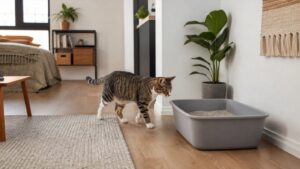
Cat furniture small apartment choices are frustrating because the wrong piece can make the room feel smaller overnight. A wide cat tree blocks the walkway. A cute cave collects fur but never gets used. A scratching post looks fine online, then tips the first time your cat stretches against it.
The best cat furniture for small apartments should solve more than one problem at once. It should give your cat height, scratching, hiding, resting, or window access without making daily life harder for you. For a broader low-clutter setup, use our minimalist cat owner guide.
For most small apartments, start with one vertical piece, one window-based resting option, one scratching surface, and one hideaway or storage-integrated bed. If you rent, favor freestanding, tension-mounted, over-the-door, or furniture-integrated options before drilling into walls. For lease-safe protection, pair this with our cat proof rental apartment guide.
Quick Answer
The best cat furniture small apartment setup usually combines one tall vertical piece, one window perch, one stable scratching surface, and one resting or hiding spot that does not add visual clutter.
If I had to choose only one first upgrade, I would choose the piece that matches the cat’s biggest daily need: height for climbers, a window perch for watchers, a scratcher for sofa scratchers, or a cave bed for shy cats. Buying “one of everything” too quickly is how small apartments start feeling crowded.
If window access is your main goal, see our cat window perch apartment guide. If you have multiple cats, duplicate high-value resting areas so one cat cannot control the only good perch.
Disclosure: This article may contain affiliate links. If you buy through these links, Indoor Cat Expert may earn a commission at no extra cost to you. We only recommend cat furniture based on stability, apartment fit, cleaning ease, renter safety, and real indoor-cat use.
Safety note: Always verify weight ratings, installation requirements, wall strength, and structural stability before allowing your cat to use any cat furniture.
Table of Contents
What We Looked For
For this guide, we focused on cat furniture that makes sense in small apartments: pieces that save floor space, add vertical territory, support scratching or resting, and do not make the room harder to live in.
The best small-apartment cat furniture should solve more than one problem. A good piece may work as a perch, scratcher, hiding spot, window seat, or vertical route while still fitting beside human furniture.
We prioritized stability, footprint, renter friendliness, cleaning ease, visual fit, and whether the furniture gives an indoor cat a real daily-use benefit instead of simply adding another bulky object to the room.
Cat furniture works best when it fits the whole apartment layout, not just one empty corner. For more small-space climbing, resting, and room-planning ideas, see our indoor enrichment and play guides.
The Small-Apartment Furniture Rule
Safety note: any elevated cat furniture must be stable, weight-rated, and placed where a missed jump will not cause injury. Senior cats, kittens, overweight cats, and cats with arthritis may need lower steps, ramps, or wider platforms.
Small apartment cat furniture should earn its footprint. A bulky tower that blocks a walkway and gets ignored is worse than one slim perch placed by the window your cat already watches.
Think vertically before buying horizontally. Cats value height because it increases observation, safety, and territory. Humans value floor space. Good furniture respects both needs.
Every piece should answer a biological need: scratching, climbing, hiding, resting, observing, or separating from another cat. Decorative novelty is optional; stable function is not.
A useful cat furniture small apartment plan should fit the way people actually live in apartments. That means limited storage, shared walls, small bathrooms, tight hallways, landlord rules, busy workdays, and a cat who may spend almost every hour inside the same rooms. Advice that ignores those constraints may sound good but fail by Tuesday.
Choose the function your cat needs before choosing a piece of furniture: a stable climbing route, a scratching surface, a quiet retreat, or a safe lookout. Measure both the product and the space needed to approach and leave it. In a small apartment, one well-placed piece is more useful than several items that obstruct walking paths or essential resources.
Small-Apartment Cat Furniture Decision Table
| Situation | Best Furniture Type | Why It Works | Watch Out For |
|---|---|---|---|
| Studio apartment | Tall cat tree or vertical tower | Adds territory without using much floor space | Must be stable and not block walkways |
| Renter with no drilling allowed | Freestanding tree or window perch | Avoids wall damage | Check weight limits and floor grip |
| Cat scratches furniture | Scratcher-lounger or sisal post | Redirects claws to a legal surface | Place it near the problem area |
| Cat needs hiding space | Covered cube or enclosed bed | Gives privacy in a busy room | Avoid trapping odor or heat |
| Multi-cat home | Multi-level tower with separate resting spots | Reduces competition for one perch | Avoid narrow platforms and dead ends |
| Small living room | Furniture-style cat condo | Blends with decor and adds function | Do not choose style over stability |
| Senior cat | Low-step perch or ramp-style furniture | Easier on joints | Avoid tall jumps and slippery surfaces |
7 Best Cat Furniture Picks for Small Apartments
1. Tall Narrow Cat Tree
A tall narrow cat tree is often the best first purchase for a small apartment because it gives your cat height without spreading across the floor. The key is choosing a tree with a stable base, usable platforms, and scratching surfaces your cat can actually reach.
Best for:
- cats who like climbing
- studio apartments
- cats who need a lookout spot
- homes without wall-mounted shelves
Watch out for:
- lightweight bases
- platforms too small for adult cats
- carpet that traps hair
- trees that wobble near windows
Place the tree near a window or social area, not in a forgotten corner. Cats use furniture more when it gives them a useful view, escape route, or resting advantage.
This is the piece I would choose first for a confident climber in a studio. The mistake is buying the tallest tree with the weakest base. In a small apartment, a slightly shorter but heavier tree is usually better than a dramatic tower that wobbles every time your cat jumps.
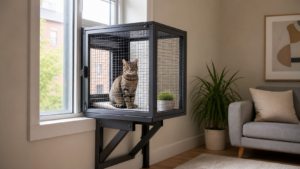
2. Window Perch
A window perch is one of the highest-value pieces of cat furniture in a small apartment. It gives your cat visual enrichment without using floor space. For many indoor cats, a safe window station can reduce boredom, restlessness, and door fixation.
Best for:
- cats who watch birds or people
- small rooms with limited floor space
- renters who cannot install wall shelves
- cats who prefer resting over climbing
Watch out for:
- weak suction cups
- loose window screens
- direct sun overheating
- windows that open too far
If window access is your cat’s main enrichment need, pair this page with our cat window perch apartment guide.
A window perch is often the most emotionally satisfying upgrade for an indoor cat. It gives them a daily “job”: watching birds, people, weather, and movement. Just be honest about the window. Weak screens, strong sun, or loose suction cups can turn a good idea into a safety problem.
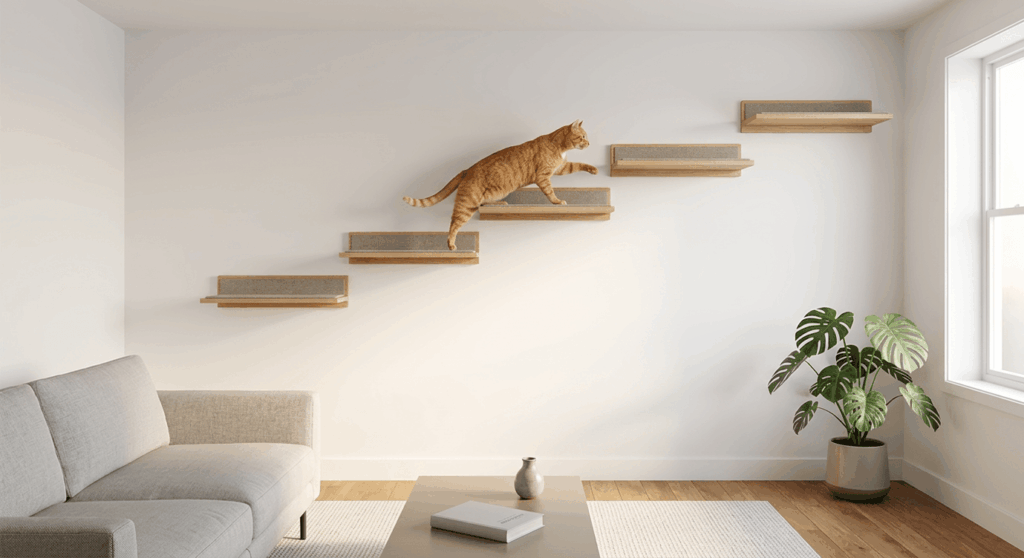
3. Wall-Mounted Cat Shelves
Wall-mounted shelves can turn unused vertical space into a cat route. They are especially useful when floor space is limited but walls are available. For a product-focused comparison, see our guide to the best cat wall shelves for small apartments, including heavy-duty, minimalist, renter-friendly, senior-friendly, and bridge-style options.
Best for:
- confident climbers
- active adult cats
- apartments with narrow rooms
- cats who need escape routes from other pets
Watch out for:
- weak anchors
- slippery shelf surfaces
- shelves placed too far apart
- rental restrictions
Wall shelves should create a real path, not isolated platforms. Cats need a way up, a way down, and enough landing space to turn around safely. For more detail, use our best cat wall shelves guide.
4. Slim Scratching Post
A slim scratching post protects furniture while using very little space. The mistake many owners make is buying a post that is too short, too light, or hidden in the wrong corner.
Best for:
- cats who scratch sofas
- renters protecting deposits
- small living rooms
- cats who need a daily stretch surface
Watch out for:
- unstable bases
- short posts
- decorative posts with poor texture
- placing the post far from the scratching target
Put the scratcher near the furniture your cat already targets. Once your cat uses it consistently, you can gradually move it to a better visual location.
Scratching posts are not decoration first. They are behavior tools. If your cat scratches the sofa arm, the post needs to start near the sofa arm, even if that is not the prettiest placement for the first week.
For large cats who need a full-body stretch, see our guide to the best tall scratching posts for large cats before choosing a short or lightweight post.
5. Hidden Cat Bed or Cave
A hidden bed or cat cave gives your cat a retreat without adding visual clutter. This is useful in apartments where the bed, sofa, desk, and living area all share one room.
Best for:
- shy cats
- senior cats
- cats who like enclosed naps
- studio apartments
Watch out for:
- hard-to-clean fabric
- poor airflow
- entrances too small for large cats
- placing the bed in a noisy traffic path
A hidden bed should feel safe, not trapped. Choose a spot where your cat can rest without being cornered by people, dogs, children, or other cats.
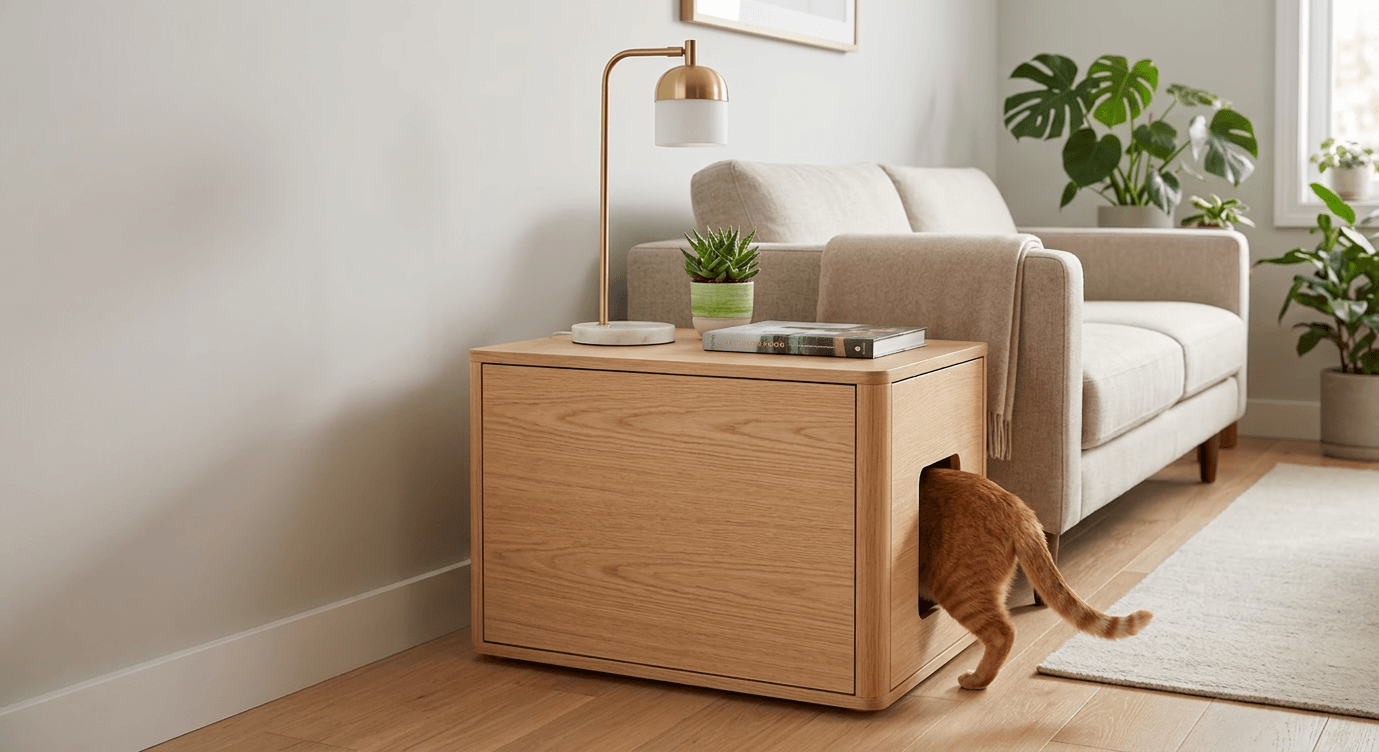
6. Storage Bench or Litter Cabinet
A storage bench or litter cabinet can solve two problems at once: visual clutter and cat access. This type of furniture can hide supplies, create a resting surface, or make the litter area look more intentional.
Best for:
- renters
- small apartments with visible litter areas
- owners who need storage
- cats comfortable with semi-enclosed spaces
Watch out for:
- poor ventilation
- tight entry points
- odor buildup
- blocked cleaning access
Do not choose a litter cabinet only because it looks good. Your cat still needs easy entry, enough turning space, airflow, and a box you can clean daily.
For more layout-specific ideas, see our guide on how to hide a litter box in a small apartment without making the setup harder for your cat to use.
This is where I would be picky. A cabinet that hides the box but makes cleaning annoying will fail quickly. If you dread opening it, you will clean it less often, and your cat may avoid it.
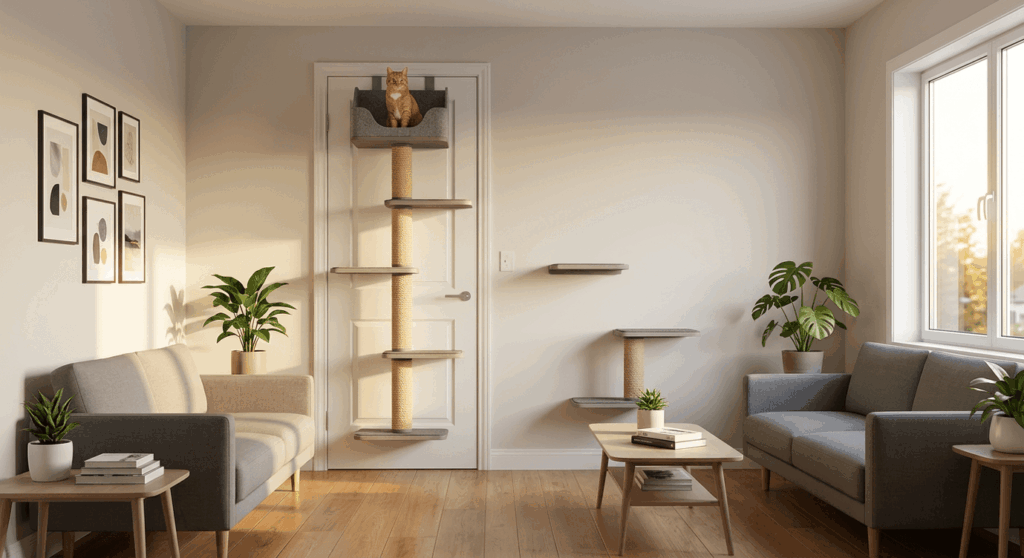
7. Renter-Friendly Door or Tension Setup
Door-mounted or tension-mounted cat furniture can add vertical space without drilling. These setups can work well for renters, but only if the door, frame, or tension points are strong enough.
Best for:
- renters
- apartments with limited wall permission
- temporary setups
- cats who enjoy climbing
Watch out for:
- hollow-core doors
- loose tension poles
- noisy movement
- cats jumping from unsafe heights
Check stability often. If the setup shifts, rattles, or leans, stop using it until it is secure.
For renters, this category can be a relief because it adds height without permanent installation. But it should still feel boringly stable. If you notice movement, noise, or hesitation from your cat, treat that as useful feedback rather than trying to convince the cat to trust it.
How to Choose Cat Furniture for a Small Apartment
Small-apartment cat furniture should earn its footprint. Before buying anything, ask what problem the furniture solves. Does your cat need height, scratching, hiding, window access, litter privacy, or a second resting zone? If the answer is unclear, wait.
A small apartment does not need every type of cat furniture. It needs the right few pieces placed where your cat already wants to spend time.
Use this order:
- Add one vertical option.
- Add one scratching option.
- Add one window or lookout option.
- Add one hiding or resting option.
- Add duplicates only if you have multiple cats.
The strongest setup usually combines function. A window perch gives rest and enrichment. A cat tree gives height and scratching. A litter cabinet gives storage and visual control. A storage bench can hold supplies and create a resting surface.
Do not buy furniture only because it is labeled “space-saving.” Measure the floor footprint, platform size, base stability, cleaning access, and whether your cat can use it comfortably.
What to Measure Before Buying Cat Furniture
Before buying cat furniture for a small apartment, measure the space the way your cat will use it, not just the way the product looks online. Many cat trees, benches, and wall systems seem compact in product photos because they are photographed alone. In a real apartment, they have to share space with doors, chairs, litter boxes, radiators, windows, cords, and walking paths.
Start with floor footprint. Measure the width and depth of the product, then add the space your cat needs to jump on and off safely. A cat tree that is only 18 inches wide may still need 3 feet of clear landing space around it.
Next, measure height. Height is useful only if your cat can access it comfortably and descend safely. A tall tree with awkward jumps may be less useful than a shorter piece with wide, predictable platforms.
Also measure the route around the furniture. If the piece blocks your path from the bed to the bathroom, the desk to the kitchen, or the litter box to the hallway, it will become annoying quickly. In a small apartment, furniture that creates human frustration often gets moved, ignored, or removed.
Check these before buying:
- floor footprint
- platform size
- base width
- total height
- landing space
- cleaning access
- distance from windows
- distance from litter boxes
- door swing clearance
- power cord location
- whether the piece blocks a walking path
The best cat furniture small apartment setup usually looks modest on paper. It fits the room, gives the cat a real function, and does not create a daily obstacle for the owner.
For a deeper comparison of stable floor trees, see our guide to the best cat trees for small apartments.
Materials That Work Better in Small Apartments
Material choice matters more in a small apartment because hair, odor, dust, and scratching damage are more noticeable. A cat tree in a large house may be tucked into a spare room. In a studio, it may sit beside the sofa, bed, or work desk every day.
Carpet-covered furniture is common, but it can trap hair, litter dust, and odor. It may work for cats who like soft traction, but it is harder to clean than wood, sisal, canvas, or removable fabric.
Sisal is usually better for scratching surfaces because it gives claws resistance. Look for wrapped posts or replaceable scratch panels. If your cat scratches horizontally, a vertical sisal post alone may not be enough.
Wood or engineered wood platforms are easier to wipe, but they need traction. Smooth shelves can be slippery, especially for senior cats. Add cork, felt, rubber-backed mats, or washable covers if needed.
For beds and hideaways, removable washable covers are better than fixed plush interiors. Small apartments do not hide odor well, so anything your cat sleeps on should be easy to wash.
Easy-clean furniture is only one part of the solution. Use this small-apartment cat hair control plan to manage loose fur across bedding, floors, upholstery, laundry, and the air.
Washable covers make routine maintenance easier, but fur can still become embedded in sofas, cushions, and upholstered cat furniture. Use our guide to remove cat hair from furniture without damaging the fabric or finish.
Good materials for small apartments include:
- sisal for scratching
- washable canvas
- removable cushions
- cork traction surfaces
- wipeable wood or laminate
- low-pile fabric
- washable mats
- replaceable scratch pads
Materials to be careful with include:
- deep carpet
- shaggy plush
- glued-on faux fur
- weak cardboard in damp rooms
- slick shelves without traction
- delicate upholstery that traps hair
- strong chemical-smelling finishes
A piece of cat furniture should still look and smell clean after several weeks of normal use. If it looks good only on day one, it may not be the right choice for a small apartment.
Placement Rules That Make Cat Furniture More Useful
Placement often matters more than the product itself. A good cat tree in the wrong corner may be ignored, while a modest perch in the right window may become your cat’s favorite place in the apartment.
Place climbing furniture near something your cat already values: a window, a social area, a resting zone, or a route between rooms. Cats use height to observe, rest, avoid conflict, and feel secure. If the furniture does not offer one of those benefits, it may not become part of the cat’s daily routine.
Place scratchers near the furniture your cat already scratches. If your cat scratches the sofa arm, put the scratcher near that sofa arm first. Do not hide it behind a plant or in a hallway just because it looks better there.
Place beds where the cat can rest without being trapped. Corners can be cozy, but they can also feel unsafe if another pet, child, or person can block the exit. A good resting place gives the cat privacy and an escape route.
Place window furniture with temperature in mind. Direct sun can become too warm, especially for senior cats, dark-coated cats, or cats who sleep deeply. Check the surface temperature during the hottest part of the day.
Use these placement rules:
- Put climbing furniture near windows or social rooms.
- Put scratchers near existing scratch targets.
- Put hideaways away from loud appliances.
- Keep litter furniture easy to access and clean.
- Keep food furniture away from litter areas.
- Do not block human walking paths.
- Do not create dead ends for multi-cat homes.
- Keep senior-cat furniture lower and easier to exit.
When furniture fails, do not assume your cat is picky. Move the item before replacing it. A small change in location can turn ignored furniture into daily-use furniture.
Best Setup by Apartment Type
Studio Apartment
In a studio, every piece of furniture is visible. Choose cat furniture that looks intentional and does more than one job.
Best setup:
- one tall narrow cat tree near a window
- one slim scratching post near the sofa
- one hidden bed under a table or shelf
- one storage-integrated piece for supplies
Avoid large cat trees with wide platforms, bulky tunnels left out all day, and furniture that blocks the main walking path. A studio needs vertical enrichment more than floor clutter.
One-Bedroom Apartment
A one-bedroom gives you more zoning options. You can place different resources in different rooms so the cat has choices without crowding the living area.
Best setup:
- window perch in the living room
- scratching post near the sofa
- quiet bed in the bedroom
- vertical shelf or tree in a social area
- litter cabinet only if ventilation and access are good
Do not put every cat item in one corner. Cats benefit from having resources spread through the apartment, especially if one room becomes noisy, sunny, or crowded.
Multi-Cat Apartment
Multi-cat homes need duplicates of the most valuable resources. One great perch can become a conflict point if one cat controls it.
Best setup:
- two resting zones
- more than one elevated option
- separate scratch surfaces
- multiple routes through narrow spaces
- no single “best spot” that one cat can guard
If one cat blocks access to a perch, bed, litter area, or food zone, furniture placement becomes part of behavior management. For the full setup, use our multi-cat apartment living guide.
Rental Apartment
Renters need cat furniture that protects the lease as well as the cat. Favor stable freestanding pieces, tension systems, over-the-door options, removable mats, and furniture that does not require permanent wall changes.
Best setup:
- freestanding cat tree
- window perch with safe mounting
- no-drill scratch zones
- washable rugs or mats near high-use areas
- storage furniture that hides supplies
Before drilling, check lease rules. If scratching or litter damage is the concern, pair furniture decisions with our cat proof rental apartment guide.
Common Cat Furniture Mistakes
Mistake 1: Buying the Biggest Cat Tree for the Smallest Room
Bigger is not always better. A huge cat tree can dominate a studio while still failing if the platforms are too small, the base wobbles, or the cat dislikes the location.
Choose height and stability over bulk. A tall narrow tree in the right spot often beats a giant tree in the wrong corner.
Mistake 2: Hiding the Scratching Post Where Guests Cannot See It
Cats scratch where scratching is useful: near resting spots, entry points, furniture, and social zones. If you hide the scratcher in a hallway or closet, your cat may keep using the sofa.
Put the scratcher near the problem area first. Once the habit changes, move it gradually if needed.
Mistake 3: Choosing Style Over Stability
Beautiful furniture that wobbles, slides, or tips will not feel safe. Cats often test furniture before trusting it. If the first jump feels unstable, they may never use it again.
Check the base, weight rating, platform size, and surface grip before buying.
Mistake 4: Forgetting Senior or Overweight Cats
Not every cat can jump, climb, or balance easily. Senior cats, overweight cats, and cats with arthritis may need lower steps, wider platforms, ramps, and softer landing zones.
If your cat stops using furniture they used to enjoy, do not assume they are bored with it. Pain, stiffness, or vision changes may be part of the problem.
Mistake 5: Buying Furniture Without Planning Cleaning
Cat furniture collects hair, dander, litter dust, food crumbs, and odor. In a small apartment, that buildup becomes noticeable quickly.
Choose washable covers, wipeable surfaces, replaceable scratch pads, and furniture you can vacuum easily. Avoid deep carpet, tight fabric tunnels, and complicated shapes that trap debris.
Cat Furniture Safety Checklist
Before your cat uses new furniture, check:
- the base does not wobble
- platforms are large enough for your cat
- shelves are anchored correctly
- surfaces are not slippery
- no staples, sharp edges, or loose screws are exposed
- cords, strings, and dangling toys are supervised
- the furniture does not block food, water, litter, or exits
- the landing area is clear
- senior cats have a safe way down
- rental walls, doors, and floors are protected
After one week, check again. Cats loosen parts through jumping, scratching, rubbing, and climbing. A piece that felt stable on day one may shift after repeated use.
Frequently Asked Questions
1. What cat furniture is best for a small apartment?
The best cat furniture for a small apartment is usually a tall narrow cat tree, a secure window perch, a slim scratching post, or a storage-integrated hideaway. These pieces give your cat height, scratching, rest, or visual enrichment without taking over the floor.
Start with the need your cat shows most clearly. If your cat climbs cabinets, choose vertical furniture. If your cat scratches the sofa, start with a better scratching post. If your cat stares out the window, start with a safe perch.
2. Is wall-mounted cat furniture safe in rentals?
Wall-mounted cat furniture can be safe, but it depends on lease rules, wall type, anchors, installation quality, and your cat’s weight and jumping style. Many renters should start with freestanding or tension-mounted options before drilling.
If you do install shelves, use proper anchors, follow weight limits, and create a safe route up and down. Do not install shelves with weak adhesive strips.
3. How much cat furniture does one indoor cat need?
One indoor cat does not need a room full of furniture. Most cats do well with one elevated resting option, one scratching surface, one hiding or resting spot, and one window or lookout station.
The exact amount depends on your cat’s age, confidence, activity level, and apartment layout. Quality and placement matter more than quantity.
4. What should I avoid when buying cat furniture?
Avoid wobbly bases, tiny platforms, slippery shelves, poor ventilation, hard-to-clean fabrics, weak suction cups, exposed staples, and furniture that blocks walking paths or litter access.
Also avoid buying pieces only because they look cute. The furniture has to match your cat’s behavior, body size, and mobility.
5. Are cat trees better than cat shelves for small apartments?
Cat trees are easier for renters because they do not require wall installation. Cat shelves are better for saving floor space and creating long vertical routes. The best choice depends on your lease, walls, cat’s confidence, and available space.
A freestanding tree is usually the safest first step. Shelves are a good upgrade when you know your cat likes climbing and you can install them properly.
6. What cat furniture is best for senior cats?
Senior cats usually need lower, wider, more stable furniture. Choose low-entry beds, ramps, short steps, wide platforms, and soft landing areas. Avoid tall furniture that requires big jumps unless there is a gradual path up and down.
If your senior cat suddenly avoids climbing or jumping, schedule a veterinary check. Arthritis, pain, vision changes, or weakness may be involved.
7. How do I make cat furniture look better in a small apartment?
Choose neutral colors, washable materials, and pieces that match your existing furniture style. Use vertical space, combine storage with cat function, and avoid scattering too many small items around the room.
For a more integrated look, pair this with our cat friendly interior design guide.
8. What is the best cat furniture for a small apartment?
The best cat furniture for a small apartment is usually a stable vertical piece that combines several functions, such as climbing, resting, scratching, hiding, or window watching. A tall cat tree, narrow tower, scratcher-lounger, or furniture-style condo can work well if it fits the room without blocking daily movement.
Avoid choosing cat furniture only because it looks attractive. In a small apartment, the piece needs to be stable, easy to clean, useful to the cat, and realistic for the space.
Final Thoughts
The best cat furniture for small apartments is not the biggest or most decorative piece. It is the furniture your cat will actually use, that your apartment can actually hold, and that you can actually clean.
Start with one useful upgrade: height, scratching, window access, hiding, or storage. Place it where your cat already wants to be. Then watch the response before adding more.
A small home does not need to feel crowded to support an indoor cat well. With the right furniture, the same room can become taller, calmer, cleaner, and easier for both of you to share.
References
- International Cat Care: Indoor Cats — indoor cat welfare and environmental enrichment guidance.
- Cornell Feline Health Center: Cat Behavior — background on cat behavior and environmental needs.
- American Veterinary Medical Association: Household Hazards — household hazard guidance for pet owners.