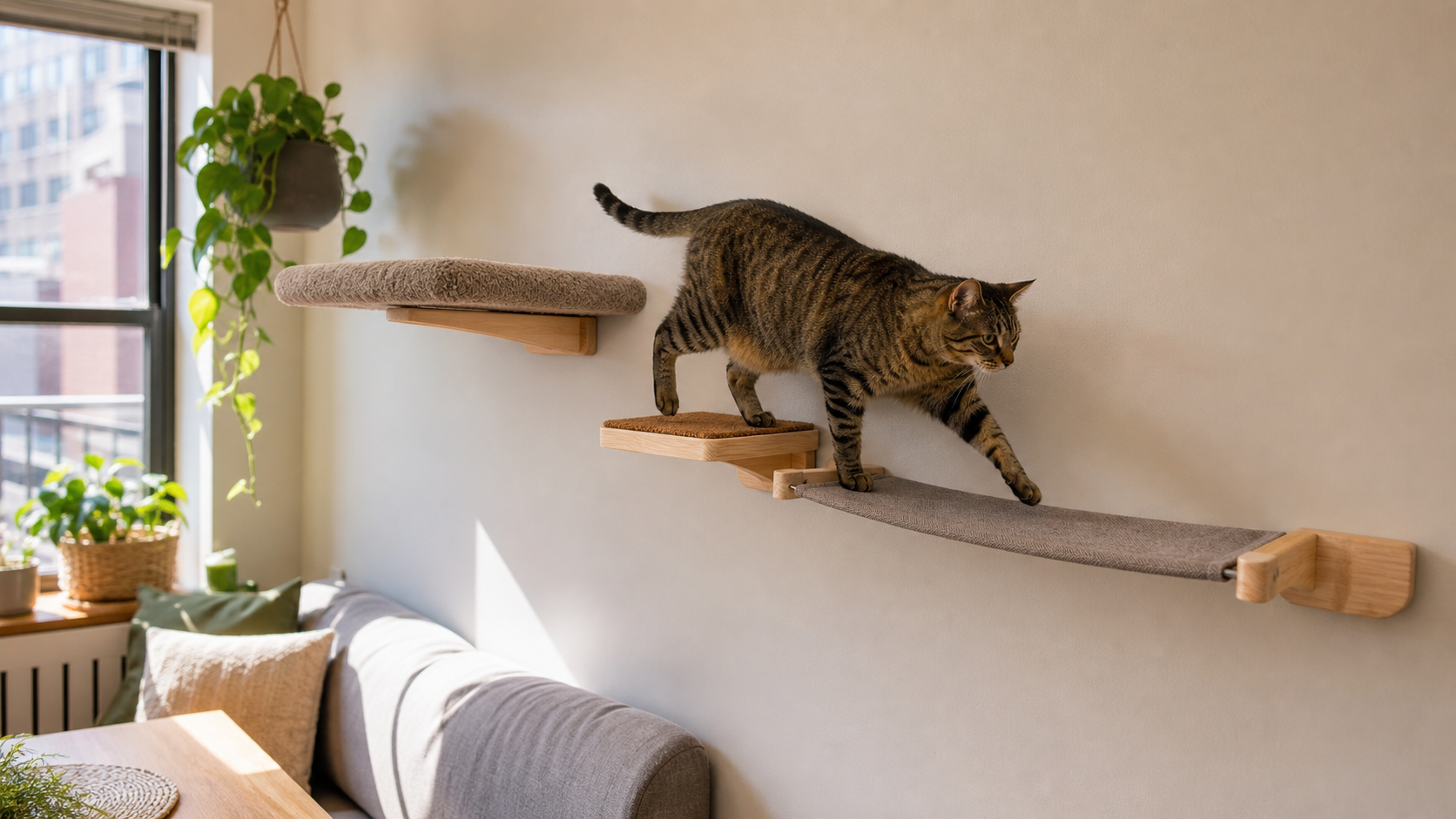
The best cat wall shelves for a small apartment combine a traction-covered landing surface, a published weight limit, hardware suited to the actual wall, and a route your cat can enter and leave without a dangerous leap. A beautiful shelf is not a good choice if it is too narrow for your cat, cannot be mounted as instructed, or creates a dead end near the ceiling.
This guide compares five current designs: a modular wooden shelf, a five-foot curved perch, a felt hammock, a multi-piece wall set, and a compact wall hammock. The products solve different problems, so the right choice depends on your cat’s body size and mobility, the wall construction, available route length, and whether you can make permanent holes.
Disclosure: This article may contain affiliate links. Indoor Cat Expert may earn a commission at no extra cost to you. Product specifications, availability, included hardware, and installation instructions can change. Confirm the current manufacturer page and manual before buying or installing any shelf.
Table of Contents
Quick Answer
The five best cat wall shelf options in this comparison are:
- Catastrophic Creations Wall Mounted Cat Shelf — best modular starting shelf
- The Refined Feline Lotus Branch Cat Shelf — best long resting perch
- Mau Houdini Floating Cat Shelf — best padded hammock-style perch
- FUKUMARU 4-in-1 Cat Wall Shelves Set — best coordinated starter route
- TRIXIE Hammock for Wall Mounting — best compact hammock for an existing route
For most homes, begin with one wide resting platform and a low, stable entry point rather than covering the wall with small steps. Verify the cat’s current weight against the product limit, check the wall type, follow the exact manual, and ask a qualified installer when you cannot confidently identify suitable structural support.
Best Cat Wall Shelves Comparison
| Product | Best use | Published feature to verify | Main limitation |
|---|---|---|---|
| Catastrophic Creations Wall Mounted Cat Shelf | Modular route building | Multiple lengths and replaceable traction options | Installation depends on wall type and layout |
| The Refined Feline Lotus Branch | Long lounge and walkway | 60.25-inch length, 10.5-inch depth, up to 50 lb | Large, heavy piece needs substantial clear wall space |
| Mau Houdini Floating Cat Shelf | Soft elevated resting spot | Felt hammock; manufacturer limit up to 24 lb | Not suitable above the stated cat-weight limit |
| FUKUMARU 4-in-1 Wall Set | Coordinated multi-piece route | Perch, bed/hammock, step and scratching elements | Every component still needs a suitable mounting point |
| TRIXIE Wall-Mounted Hammock | Compact rest station | 54 × 28 × 33 cm hammock with sisal/plush | Best as one part of a route, not a complete route alone |
Safety First: A Shelf Is Only as Safe as Its Installation
A product’s stated capacity is not a promise that every installation will hold that load. The result also depends on the wall material, fastener, bracket, fastener location, installation quality, shelf condition, and the dynamic force created when a cat lands or changes direction.
Before buying, answer these questions:
- What is behind the finished wall: wood framing, metal framing, masonry, or another system?
- Does the manufacturer provide instructions for that wall type?
- Can the specified mounting points align with appropriate structural support?
- Is the published capacity comfortably above the weight of every cat that may use it?
- Is the platform deep enough for the cat to turn and settle?
- Does the walking surface provide secure traction?
- Can the cat reach it through a continuous route and come down another way?
- Are breakable objects, hot appliances, open windows, cords, and doors outside the fall and jump zone?
Do not substitute a random anchor or universal screw-length rule for the product manual. For example, Catastrophic Creations says its furniture is designed around common stud spacing and specifically discourages relying on drywall anchors as the primary support for its products. The Refined Feline’s Lotus Branch instructions use product-specific mounting locations and distinguish between attachment to a wall beam and use of supplied anchors. These are manufacturer-specific systems, not a formula for every shelf.
If you rent, obtain the required permission before drilling. “Renter-friendly” should mean the installation and future repair comply with the lease; it should not mean attaching a load-bearing cat platform with removable adhesive. Our cat-proof rental apartment guide covers deposit-safe planning beyond wall furniture.
How We Chose These 5 Picks
We selected products with a current official product page or instruction source that lets a reader verify important features. We prioritized:
- a stated purpose as wall-mounted cat furniture;
- a traction or resting surface rather than bare decorative wood alone;
- published dimensions, weight guidance, materials, or installation information;
- designs useful in a small apartment;
- different functions rather than five nearly identical steps;
- components that can form a route with a clear entry and exit.
This is a feature comparison based on published information, not a claim that Indoor Cat Expert physically load-tested each product. A shelf can fit the category and still be unsuitable for your wall or cat.
The 5 Best Cat Wall Shelves for Small Apartments
1. Catastrophic Creations Wall Mounted Cat Shelf — Best Modular Starting Shelf
Catastrophic Creations sells its wall-mounted shelf in more than one length and positions it as part of a modular wall system. The official page offers surface options such as sanded wood, cork, or sisal, which matters because traction is one of the first things to evaluate on an elevated route.
Why it stands out: You can begin with a usable landing platform and expand the system later. A modular approach is helpful in a small apartment because it lets you work around windows, furniture, and verified mounting points instead of forcing a single oversized arrangement into the room.
Best for:
- owners building a route in stages;
- cats that need a firm platform rather than a deep hammock;
- rooms where different shelf lengths make layout easier;
- homes that can follow the company’s wall-specific installation guidance.
Check before buying: Measure the usable platform, not just the shipping or overall dimension. Choose a traction surface appropriate for the cat, and confirm the selected variant, hardware, wall type, and mounting locations in the current documentation. Catastrophic Creations publishes different information for products such as shelves, bridges, and fabric pieces; do not transfer a capacity from one component to another.
Main limitation: Modularity does not remove the need for structural planning. A route may need to shift when verified mounting locations do not match the sketch you first imagined.
Bottom line: This is the most flexible first choice when you want a real shelf now and the option to add compatible route pieces later.
2. The Refined Feline Lotus Branch — Best Long Resting Perch
The Lotus Branch is a curved wooden shelf intended to serve as both a walkway and a lounging surface. The manufacturer lists an overall length of 60.25 inches, a depth of 10.5 inches, mounting holes spaced for 16-inch wall studs, and support for cats up to 50 pounds. It includes a removable carpet or faux-fur covering for comfort and traction.
Why it stands out: One long surface provides more room to walk, turn, stretch, and share than a series of tiny steps. It can also reduce the number of transitions needed along a straight wall.
Best for:
- a long, unobstructed wall;
- cats that prefer lounging to rapid climbing;
- owners who want furniture-like wood finishes;
- households that can install a large, approximately 20-pound shelf as directed.
Check before buying: The piece is more than five feet long, so mark the full outline on the wall before ordering. Confirm that doors, windows, curtains, vents, art, and furniture will not interfere. The company strongly recommends wall-stud installation even though anchors are supplied. Read the latest instructions rather than assuming the included hardware fits every wall.
Main limitation: This is not a compact little step. Its length, weight, and installation requirements make it a poor match for a narrow wall fragment or an uncertain wall structure.
Bottom line: Choose the Lotus Branch when one substantial, attractive rest-and-walk surface fits better than several small platforms.
3. Mau Houdini Floating Cat Shelf — Best Padded Hammock-Style Perch
The Mau Houdini combines a metal frame with a replaceable felt hammock. Mau lists dimensions of 25.5 × 14 × 4 inches and describes it for cats up to 24 pounds. The felt can be vacuumed or lint-rolled and replaced when worn.
Why it stands out: Some cats prefer a slightly yielding resting surface over a hard plank. The defined platform has a generous front-to-back dimension, while the neutral felt and frame can fit a modern apartment without taking floor space.
Best for:
- cats within the manufacturer’s published weight limit;
- cats that seek soft, cupped resting places;
- owners who value a replaceable fabric component;
- use as a rest station connected to firmer steps or a cat tree.
Check before buying: Weigh the cat rather than estimating, especially for a large or overweight cat. Review the current assembly instructions and confirm that the specified anchors and wall requirements are appropriate for your wall. Inspect felt and attachment points routinely for stretching, chewing, or damage.
Main limitation: The 24-pound limit is lower than some solid shelf products. A hammock can also move differently underfoot, so introduce it from a low, easy approach before making it a high destination.
Bottom line: The Houdini is the strongest comfort-focused pick here for an eligible cat, but it should be treated as one carefully installed rest station—not a complete climbing plan by itself.
4. FUKUMARU 4-in-1 Cat Wall Shelves Set — Best Coordinated Starter Route
FUKUMARU’s current official catalog includes a four-piece wall-mounted set combining multiple functions such as a platform, hammock or bed area, step, and scratching surface. A coordinated set can simplify the visual design and give a cat more than one reason to use the wall.
Why it stands out: Buying pieces intended to work as a family can be easier than mixing unrelated bracket depths, materials, and styles. The set provides movement, rest, and scratching elements within one plan.
Best for:
- a blank wall large enough for several components;
- cats that use both scratching and climbing furniture;
- owners who want a coordinated wood-and-fabric appearance;
- a first route with more variety than a row of identical steps.
Check before buying: Verify the exact variant because FUKUMARU sells several similarly named sets. Confirm the current dimensions, component list, published limit, mounting instructions, and required spacing for the exact model. Sketch each component at full scale and locate appropriate mounting support before purchase.
Main limitation: A boxed set cannot guarantee a safe layout. Your wall may require a different order or may not provide suitable attachment points where the promotional photo shows them.
Bottom line: This is the best all-in-one route starter in the comparison, provided the exact model and all mounting positions work with your wall.
5. TRIXIE Hammock for Wall Mounting — Best Compact Hammock for an Existing Route
TRIXIE’s wall-mounted hammock is listed at 54 × 28 × 33 cm and uses sisal and plush surfaces. The manufacturer describes it as suitable for climbing landscapes and provides downloadable product instructions.
Why it stands out: It adds a compact rest location and a different texture without asking you to install a five-foot wooden structure. The enclosed-looking hammock profile can suit cats that like leaning against a side while observing the room.
Best for:
- adding a rest stop to an existing route;
- a smaller wall section;
- cats that enjoy hammock-style beds;
- owners who can access and follow the current TRIXIE instructions.
Check before buying: Read the manual and confirm the exact item number, wall requirements, hardware, and current availability in your region. Position it so the cat can step into it from a stable surface rather than making a blind upward jump.
Main limitation: A hammock is a destination, not a complete highway. It needs an appropriate entry and exit, and its fabric and attachment points require regular inspection.
Bottom line: Choose this to add compact comfort to a route you have already planned, not as the only elevated object on an empty wall.
How to Measure Before You Buy
Measure the cat
Record current body weight and compare it with the exact product limit. Then observe the cat lying, turning, jumping, and stepping down. A broad or long-bodied cat may need more usable depth than a small product photo suggests.
For a senior cat or one with stiffness, reluctance to jump, changed grooming, or an altered gait, stop treating layout as a décor question. Arrange a veterinary assessment and use lower, broader, closer transitions. Our guide to signs of cat arthritis explains changes worth discussing with a veterinarian.
Measure the wall and route
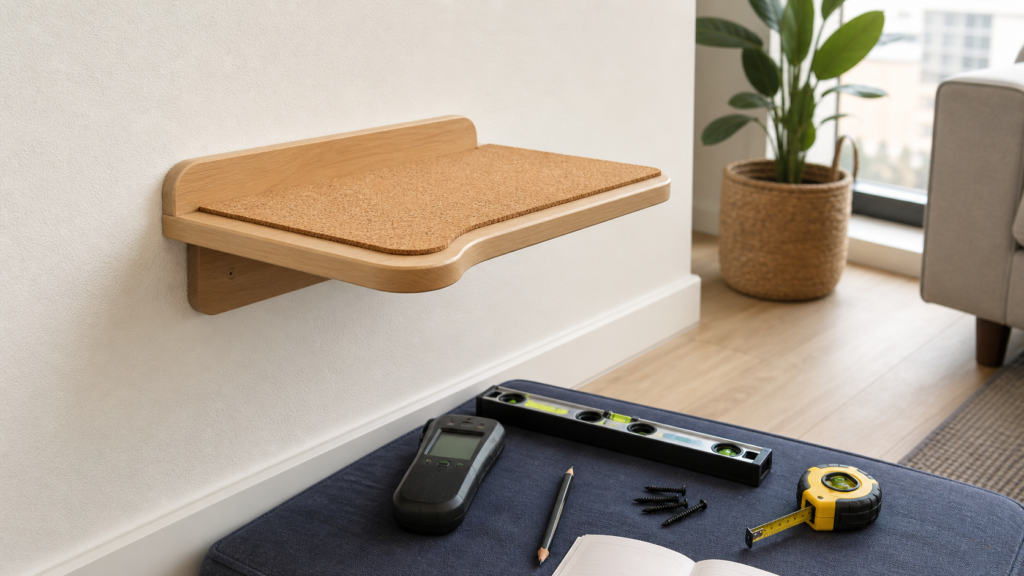
Use painter’s tape or removable paper templates to mark each product’s full outline. Include bracket clearance, approach space, the cat’s body length, curtains, trim, vents, outlets, doors, and furniture movement.
Do not buy five shelves and decide their route afterward. First identify:
- a stable entry point;
- a sequence the specific cat can comfortably negotiate;
- at least one broad resting platform;
- a safe exit or alternate descent;
- structural mounting positions for every component.
For route planning rather than product selection, see our cat superhighway ideas guide.
Installation Checklist
Use this checklist after reading the exact product manual:
- Confirm the product and every included piece arrived undamaged.
- Confirm the cat is within the current published limit.
- Identify the wall construction instead of assuming every wall has wood studs.
- Mark utilities and avoid drilling where electrical, plumbing, gas, or other services may be present.
- Use the manufacturer-specified mounting method for the identified wall.
- Hire a qualified installer if the wall, support, fastener, or utility location is uncertain.
- Install the traction surface and verify it cannot slide away under a landing cat.
- Test for movement according to the manual before allowing access.
- Introduce the lowest section while supervising.
- Recheck fasteners, brackets, wood, fabric, seams, and traction routinely.
- Close access immediately if anything loosens, cracks, pulls away, or becomes wet or damaged.
Never place a new route above a stove, aquarium, television, glass table, hard-edged furniture, or an unprotected open window. A shelf near a window does not replace a secure screen or other appropriate window protection.
Planning for Senior, Large, and Multi-Cat Homes
Senior cats and reduced mobility
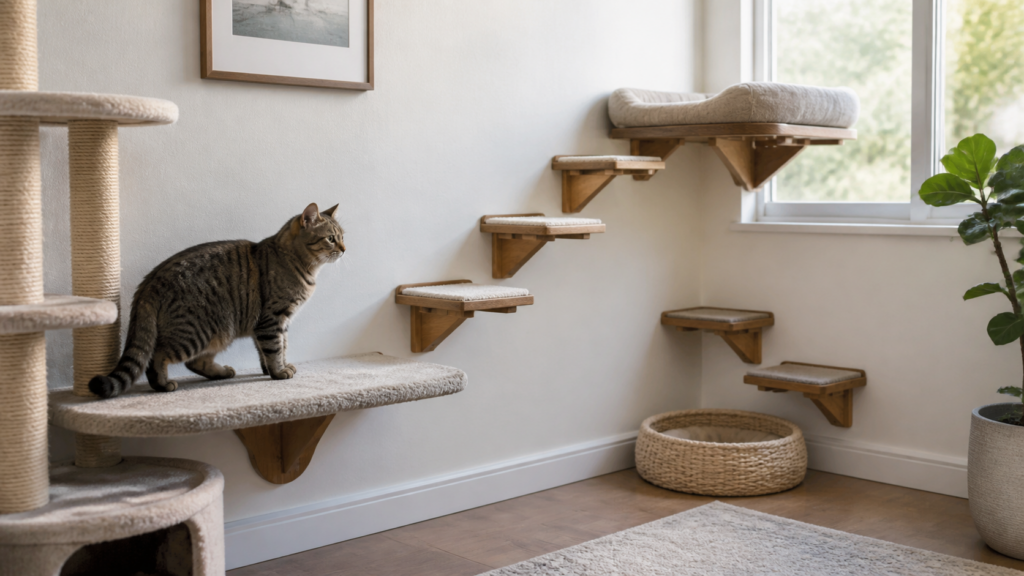
Use broader landings, lower heights, shorter transitions, and multiple ways down. A stable cat tree, ottoman, or other appropriate floor-standing unit can form the first stage. Do not lure a reluctant cat upward with food until you know the route is physically comfortable.
Large cats
Check both body weight and usable platform size. A limit above the cat’s weight does not guarantee the cat can turn or lie comfortably. Avoid extrapolating capacity from one product in a brand’s range to another.
Multi-cat homes
A single narrow route can become a blocking point. Provide more than one valued elevated location and avoid dead ends where one cat can trap another. Watch for staring, chasing, guarding, swatting at access points, or one cat abandoning the route.
If cats compete over space, review our guide to multi-cat resource guarding before expanding the wall system.
Common Mistakes to Avoid
Choosing by appearance alone
A floating shelf can look minimal while offering poor traction, insufficient depth, or unclear mounting instructions. Start with safety and fit, then choose finish and color.
Treating a weight limit as an installation guarantee
Published limits usually assume correct installation and an appropriate wall. They do not make every anchor, wall, or homemade substitution safe.
Using adhesive-only mounting for a load-bearing shelf
Removable adhesive products are useful for lightweight décor, not as a universal substitute for the structural attachment specified for elevated cat furniture.
Creating a beautiful dead end
A high bed with only one narrow approach may create conflict or force a difficult turn. Plan entry, rest, passing room, and descent together.
Making the route too difficult on day one
Start low. Let the cat inspect and use the first platform, then open access to higher sections. Never place or strand a frightened cat at the top.
Forgetting maintenance
Traction material wears, fabric stretches, and fasteners can loosen. Add wall furniture to a regular home-safety check instead of treating installation as a one-time task.
Best Shelf Layout by Apartment Type
Studio apartment
Choose one wall that does not double as the main walking aisle. A stable floor-standing entry piece, two or three transitions, and one broad destination are usually more useful than many small shelves scattered around the room. Keep the route away from the cooking zone and apartment entrance so ordinary household movement does not repeatedly surprise the cat.
If the studio has only one suitable structural wall, prioritize a long platform or compact coordinated set over an elaborate loop. The cat still needs a comfortable way down; a nearby cat tree can provide both the entry and descent without using another wall.
One-bedroom apartment
Use the room where people and the cat spend the most calm time. A living-room route can connect a cat tree to a resting platform, while the bedroom remains a quieter ground-level retreat. Avoid extending the route over a frequently opened door or creating access to shelves that hold medication, cosmetics, plants, or breakable objects.
One-bedroom homes also make it easier to close the route temporarily during cleaning, maintenance, deliveries, or furniture moves. Do not rely on a closed door as the only routine safety control if the cat can access the wall at other times.
Rental with mounting permission
Written permission does not make every location suitable. Agree on the allowed wall and repair expectations, then verify the wall and product instructions. Photograph the wall before installation and retain the product manual, hardware information, permission, and installation record. When moving out, remove and repair the system according to the lease rather than improvising a cosmetic patch.
Multi-cat apartment
Distribute value instead of creating one premium shelf that every cat must share. A long platform may allow more than one cat to rest, but it still needs more than one approach when social tension exists. Separate window views, beds, scratchers, and floor-level retreats reduce pressure on the wall route.
Observe the route during normal household life, not only during the first excited exploration. A cat that uses it when alone but avoids it when another cat enters the room may be experiencing blocking or guarding. Add another resource location before adding more height to the contested route.
Frequently Asked Questions
Are cat wall shelves safe?
They can be appropriate when the product fits the cat, the wall and hardware meet the current instructions, the route provides traction and safe access, and the installation is inspected over time. No wall shelf is universally safe in every wall or for every cat.
How deep should a cat wall shelf be?
There is no single depth suitable for every cat and function. Compare the product’s usable depth with the cat’s body size and intended activity. A small transition step can differ from a platform intended for turning and sleeping.
How far apart should cat wall shelves be?
Use the cat’s observed mobility and the manufacturer’s layout guidance. Catastrophic Creations publishes one spacing range for its own systems, but that should not be treated as a universal rule. Seniors, kittens, disabled cats, and large cats may need a different route.
Can I mount cat shelves without studs?
That depends on the specific product, wall construction, approved fasteners, and instructions. Some products supply anchors; others strongly prioritize structural attachment. Do not improvise. Ask the manufacturer or a qualified installer when the specified method is unclear.
Can renters install cat wall shelves?
Only if the lease, property rules, wall condition, and approved repair plan allow it. Obtain permission when required. A floor-standing cat tree or secure window perch may be more appropriate when permanent mounting is prohibited. Compare our best cat trees for small apartments if drilling is not realistic.
What surface is best for traction?
Cork, sisal, secured carpet, and other manufacturer-provided textured surfaces can improve grip. The material must remain firmly attached, resist sliding, and be inspected for wear or chewing.
Do cats need railings on wall shelves?
Not every cat shelf uses a railing. What matters is the whole design: usable width, traction, route difficulty, cat mobility, and placement. A small lip cannot compensate for a narrow, slippery, poorly installed platform.
What if my cat will not use the shelves?
Give the cat time to investigate. Start with low access, place familiar bedding or scent on a stable platform, and reward voluntary exploration. Do not carry the cat to a high shelf. If jumping behavior has recently declined, consider pain or illness before assuming stubbornness.
Final Verdict
The Catastrophic Creations Wall Mounted Cat Shelf is the most flexible modular starting point. The Lotus Branch suits a long wall and a cat that wants a broad lounge. The Mau Houdini offers a soft hammock for cats within its 24-pound limit. The FUKUMARU 4-in-1 set provides a coordinated multi-piece starter system, while the TRIXIE wall hammock adds a compact rest stop to an existing route.
Whichever product you choose, buy only after you have measured the cat, mapped the complete route, identified the wall, checked current documentation, and confirmed a safe installation method. The best-looking shelf is valuable only when the cat can reach it, use it comfortably, and come back down safely.
References
- American Association of Feline Practitioners: Feline Environmental Needs Guidelines
- Catastrophic Creations: Wall Mounted Cat Shelf
- Catastrophic Creations: Installation and Product FAQ
- The Refined Feline: Lotus Branch Cat Shelf
- Mau: Houdini Floating Cat Shelf
- FUKUMARU: Official Cat Wall Furniture Catalog
- TRIXIE: Hammock for Wall Mounting